
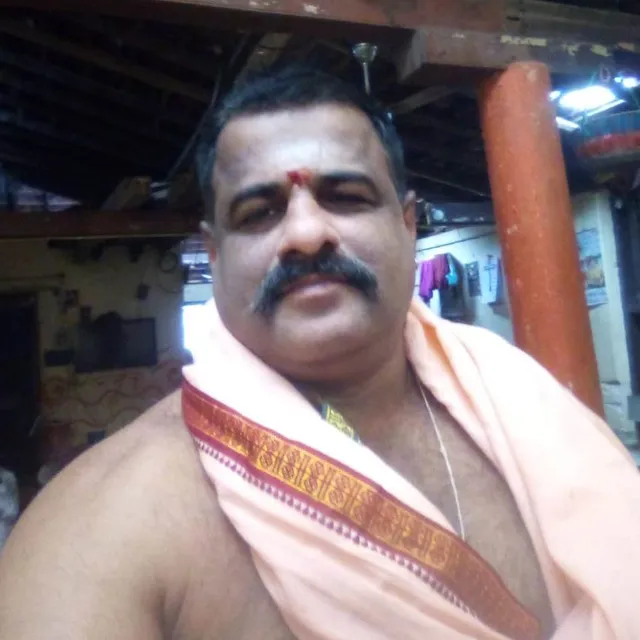
Gokarna Moksha — known to devotees for years as Shree Gokarna, and found until recently at shreegokarna.com — is the pooja service of Vishweshwar D. Bhat Gurulingaji, who carries the title Kshetra Gokarna Purohit — purohit of this kshetra. He conducts Vedic rituals in the compound of the Shree Mahabaleshwar Temple at Gokarna, in Uttara Kannada district of Karnataka. When you ring the numbers on this site, he is the person you speak to.
Most families who reach this page have just had a death in the household, or have been told that a pitru dosha or sarpa dosha in the horoscope needs a parihara — and are about to hand something important to a stranger on the strength of one phone call. So this page sets out who performs your puja, which priests sit with him, what the arrangements cover, where each rite is conducted, and how a booking runs from that call to prasadam.
Our purohit at a glance
- Purohit
- Vishweshwar D. Bhat Gurulingaji, Kshetra Gokarna Purohit.
- Where
- Shree Mahabaleshwar Temple compound, Koti Teertha and the sea shore at Gokarna, Uttara Kannada, Karnataka.
- Languages
- Kannada, Hindi and English with the family; Sanskrit for the ritual itself.
- Speak to him
- +91 83109 37047 or +91 88613 21496.
Who is Vishweshwar D. Bhat Gurulingaji, Kshetra Gokarna Purohit?
The title carries the important part. A kshetra purohit is a priest of the holy place itself — he lives beside the temple, performs its pitru karya as his daily work, and is answerable to families who come back year after year. That is a different thing from a pandit assigned by a national booking platform who may be meeting Gokarna for the first time on the morning of your ritual.
Gurulingaji conducts the rites this coast is known for: Narayan Nagbali (Narayana Nagabali) pooja, Moksha Narayana Bali — the Narayan Bali puja, Tripindi Shraddha, called Tripindi Shradh in the north, Naga Bali and Nagbali rites, pind daan and pinda daan with tarpana, asthi visarjan, Thila Homam, and remedial poojas for pitru dosha and pitra dosh — nivarana in the south, nivaran in the north, parihara by either name.
Ask him on the phone about his training, the parampara he follows, or how often he has performed the exact rite your family needs. Those are fair questions and he answers them himself — better heard in his own voice than read as a claim typed onto a web page.
Who are the other priests who perform the poojas at Gokarna?
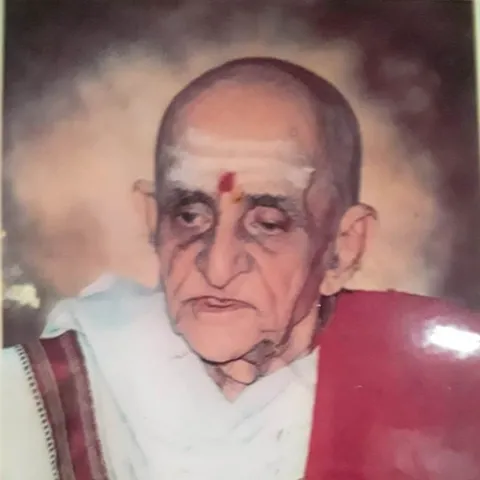
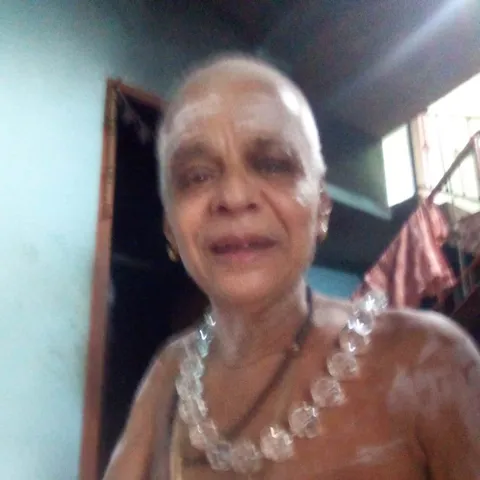
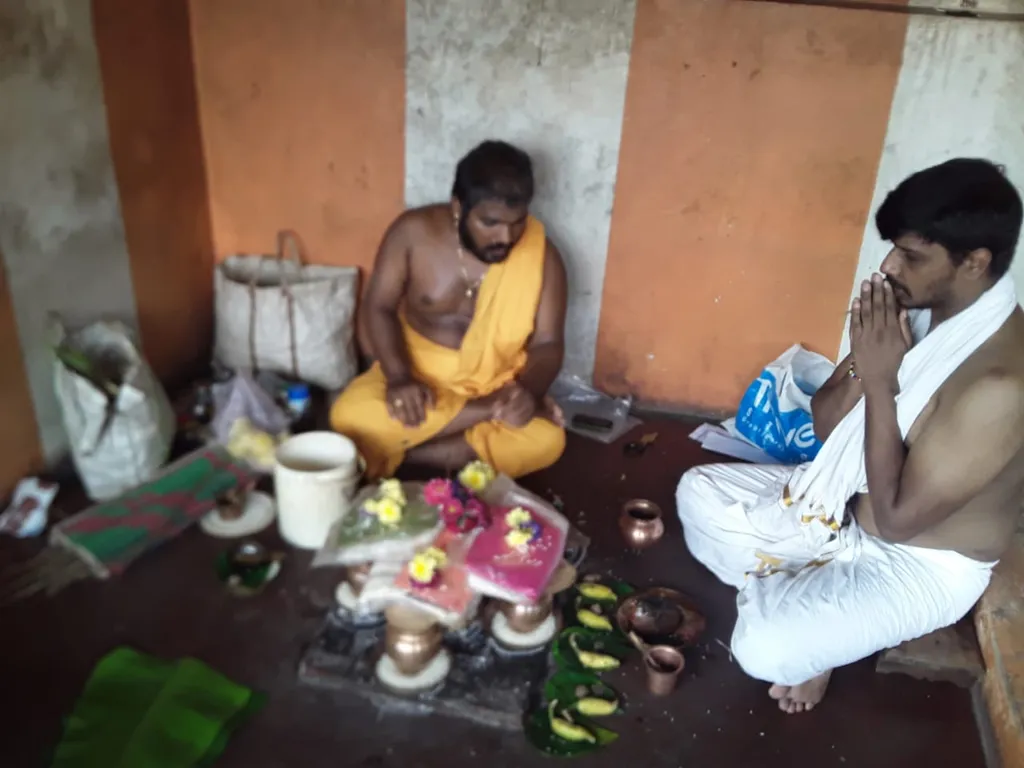
Several rites are prescribed with more than one vaidika chanting together, and a two- or three-day observance cannot be carried by one man. Priests who serve at the same kshetra officiate alongside Gurulingaji — among them Ve. Dwijaraj Upadhya and Shri Shreedhara Adi, both seen conducting rituals in the Gokarna pooja and puja gallery. The number your rite needs is set by the vidhi, and you are told it before the day.
Which poojas and pujas do we perform at Shree Kshetra Gokarna?
These are the dharmika vidhis conducted here. If you are unsure which one your family needs, describe the situation on the phone instead — many calls begin with a family that knows something is wrong and not yet the name of the remedy. Durations and auspicious tithis are listed on the Gokarna pooja services page.
- Moksha Narayana Bali Pooja
- Tripindi Shraddha
- Tila Havana
- Pitru Shaapa
- Preta Dosha
- Kshetra Vidhi
- Naga Bali
- Naga Pratishte
- Pitru Paksha Pooja
- Narayan Nagbali Pooja
- Pind Daan
- Asthi Visarjan
- Kaal Sarp Dosh Nivaran Pooja
How is a pooja conducted, from your first phone call to prasadam?
Knowing the sequence in advance takes a good deal of anxiety out of the journey.
- You call and describe the situation — not the ritual. Who has passed and how, or what the astrologer has said. If the correct remedy is a different rite from the one you had in mind, you are told so on that call.
- The details are taken — gotra and names of the departed and the karta, the nakshatra or tithi of death where known, and how many will come. The sankalpa is framed from these, so they matter most.
- The tithi is fixed — Amavasya, a day within Pitru Paksha, a death anniversary — settled against the panchanga and your travel dates, and the slot is held.
- The samagri is prepared here. You are told only what to carry: traditional dress, a change of clothes for the teertha snana, and the asthi kalasha if there is one.
- You arrive and are received. Where the vidhi calls for it, a Kshetra Vidhi and the ritual snana come first, so the family enters the main rite purified.
- The ritual is performed, and explained as it goes. The mantras are Sanskrit; each step is explained in Kannada, Hindi or English, so nobody is left guessing what is happening.
- Prasadam, and what follows. The rite is concluded properly rather than hurried on to the next booking, prasadam is given, and you are told what observances your household should keep afterwards.
Call +91 83109 37047 (Vishu Guruling) for all Gokarna pooja details
WhatsApp UsWhat do our arrangements include?
For every ritual on this site, the amount quoted covers the following, so a family arriving from Bengaluru, Pune or Hyderabad has nothing to organise on the morning itself:
- The complete pooja samagri — til, ghee, samidha, darbha, kalasha, the ingredients for the pindas, flowers, and the naga idol where the rite prescribes one.
- The officiating priests, in the number the vidhi requires, and their dakshina.
- The sankalpa and vidhi as per shastra, taken in your name, gotra and nakshatra and in the name of the departed.
- The formalities at the Shree Mahabaleshwar Temple compound and at the teerthas.
- Seating and guidance for the whole family through the ceremony, in a language you follow.
- Prasadam, and honest guidance on where to stay within walking distance of the temple.
Travel, rooms and meals sit outside that and are paid by you directly. No figure appears anywhere on this site: the dakshina depends on the ritual, its duration, the number of priests, the samagri and the size of the family, so a printed rate card would only be a guess about your household. The Gokarna pooja cost and dakshina guide explains how the amount is arrived at.
Where in Gokarna are the rituals performed?
Everything the pitru karya needs stands within a short walk here. The main rites are conducted in and around the Shree Mahabaleshwar Temple compound, where the Atmalinga is enshrined. The ritual snana, the tarpan and tarpana and the pinda offerings are made at Koti Teertha, the sacred tank beside the temple. For asthi visarjan and the concluding immersions the family walks down to the shore of the Arabian Sea. One stay therefore covers the preliminary vidhi, the main pooja and the concluding rites, instead of several journeys at a time when a family can least manage them. If you have not been before, this introduction to Gokarna covers how to reach it.
How do you help devotees travelling from outside Karnataka?
Many families we serve travel from Maharashtra, Goa, Andhra Pradesh, Telangana, Kerala and Tamil Nadu, and others from households settled abroad. Nobody should have to work Gokarna out alone at short notice, so before you book you are told how many nights the ritual needs — several rites require a two-day stay, since darshan is not taken on the day of the pooja itself — where to find rooms near the temple, and how to reach the town from Gokarna Road station or from Goa, Hubballi and Mangaluru. Say if anyone in the party is elderly or unwell and the timings are set around them. Where a family cannot travel at all, an online or remote puja booking at Gokarna follows the same vidhi, with the sankalpa in your name and gotra.
Which languages are the poojas explained in?
Kannada, Hindi and English. The mantras are chanted in Sanskrit, as prescribed, but the sankalpa, the meaning of each offering and the instructions to the karta come in the language your family follows — in Kannada the rite is simply called a pooje. That matters more than it sounds: a shraddh or a pitru dosha parihara performed silently over a family who cannot follow a word of it is a very different thing from one the purohit stops and explains. If your household is easier in another language, say so when you call.
Do you perform poojas outside Gokarna?
Gokarna is where our own purohits perform the rites, and every arrangement described on this site refers to Gokarna. Families do ask about Varanasi, Gaya Ji, Rameshwaram and other kshetras; those requests can be discussed, but please call before making travel plans so that what can be arranged, and by whom, is settled plainly first. We would rather decline than pass your family to someone we cannot vouch for.
What do families tell us after the pooja?
Two things, mostly. First, relief that the vidhi was not rushed — the chanting unhurried, the karta told what to do at each step, the family not moved along for the next booking. Second, that nothing surprised them: the amount discussed on the phone was the amount at the end, and the samagri was ready on arrival. Devotees leave their own accounts on our Google Business Profile, still listed under our earlier name Shree Gokarna, which you are welcome to read before deciding.
Why choose a resident Gokarna purohit rather than a booking platform?
Search for a pandit or poojari in Gokarna and much of what you find will be aggregator sites listing priests across a dozen cities. They may be competent, but a resident purohit gives you three things a marketplace structurally cannot. He knows this kshetra — which teertha a rite belongs at, and how the temple's routine shapes the morning. He is accountable in person, because the families of Uttara Kannada will still be walking past his door next year. And he takes the enquiry himself, so whoever decides you need a Naga Bali, a combined Narayan Nagbali or a pitru dosha nivarana is the man who performs it.
How do I book a purohit or pandit in Gokarna?
Call +91 83109 37047, or +91 88613 21496 if the first line is engaged. If you would rather write — often easier when several ancestors' names and dates must be conveyed — send the details through the contact page and you will be called back. Keep four things ready: the name and gotra of the departed, the nakshatra or tithi of death as closely as you know it, who will act as karta, and the dates you can be in Gokarna. During Pitru Paksha, when the shraddha, tarpan and pind daan diary fills, and around each Amavasya, call early — the tithi you want goes first.
Frequently asked questions about our Gokarna purohit and poojas
Who will perform my pooja at Gokarna?
How experienced are your priests, and how do I judge that before I travel?
Do you arrange the pooja samagri, or should I bring it myself?
What is included in the dakshina, and is the amount fixed?
Can you help us with accommodation and local travel in Gokarna?
Do you perform poojas at Varanasi, Gaya and Rameshwaram as well?
Which languages do your priests speak?
How many family members can attend the pooja?
How do I book a purohit in Gokarna, and how far ahead should I call?
Speak to the Gokarna purohit yourself
Tell Vishweshwar D. Bhat Gurulingaji what has happened in your family and which dates you can travel. You will have the right ritual named, a suitable tithi confirmed, the exact dakshina and guidance on where to stay — on the same call.