
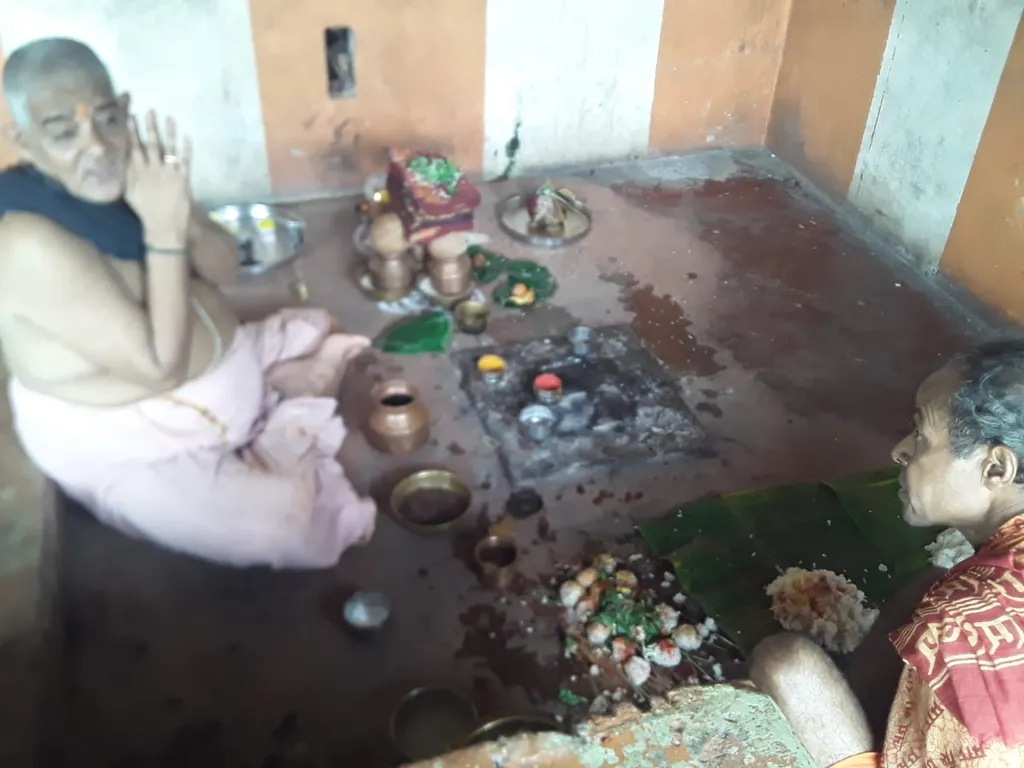
Every photograph on this page was taken at Shree Kshetra Gokarna — inside the compound of the Shree Mahabaleshwar Temple and on the ghats around it — during rituals conducted by our own purohits: the vessels and darbha grass laid out on the floor, the pindas being shaped by hand, the family seated beside the priest, and the priests themselves. None of it is stock photography borrowed from another temple town.
We publish them because almost every family that books an ancestral rite here books it without having seen the place — from Bengaluru, Mumbai, Pune, Hyderabad, Chennai and from abroad. The questions in those first phone calls are nearly always visual ones: how many priests sit for the pooja, where the family sits, what is placed on the floor, what to wear, how long it runs. A paragraph can describe a puja. A photograph settles it.
The images below are grouped by ritual, and every caption names the rite and the place in Gokarna where it was taken, so you can tell a Narayana Bali from a pind daan without guessing. Tap any photograph to open it at full size. If you have not yet settled on which rite your family needs, start with the full list of pooja services at Gokarna.
What does Narayan Bali puja look like at Gokarna?
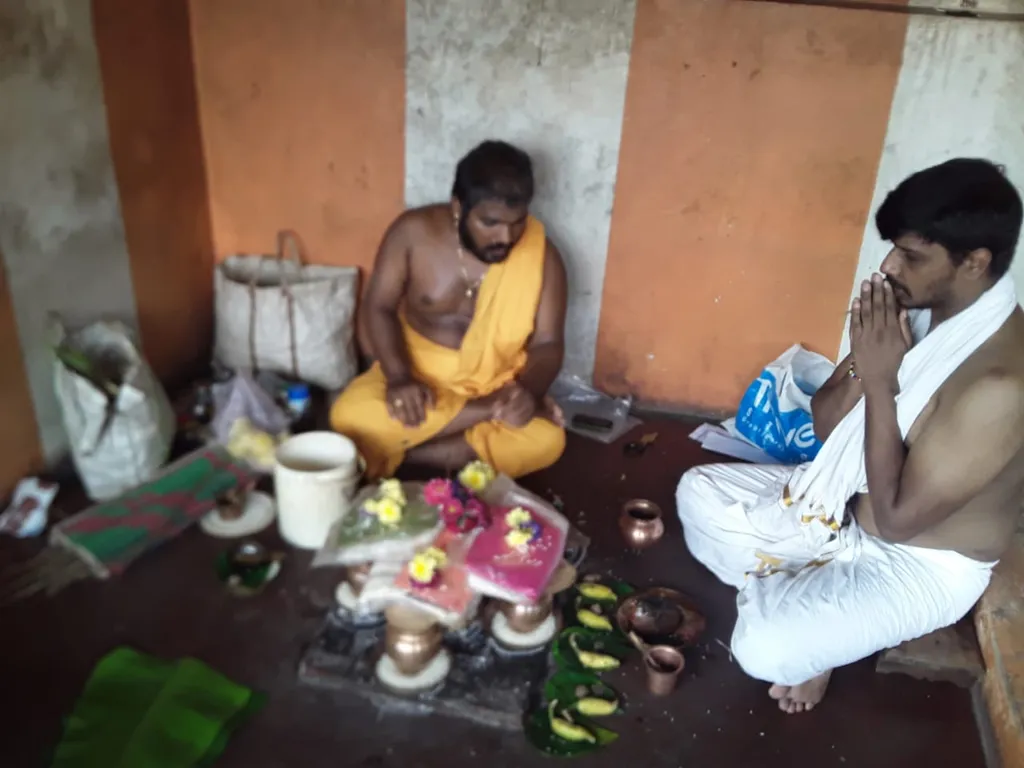
The Narayana Bali rite is the one visitors ask to see most often, and it is quieter than they expect. The priest sits facing the ritual space with the family beside him; the kalasha, the darbha, the tila and the offerings are arranged in a prescribed order in front of everyone, and the vidhi proceeds mantra by mantra for several hours. No crowd and no spectacle — close, deliberate work, which is exactly what the photographs show.
Families come here for this rite under several names — Narayan Bali, Narayana Bali, Narayanbali, Moksha Narayan Bali — and many perform it together with the serpent rite as the combined Narayan Nagbali pooja at Gokarna. The procedure, the tithis on which it is performed and who in the family should sit for it are on the Moksha Narayana Bali pooja page. Allow roughly three to four hours for the ritual itself.
Call +91 83109 37047 (Vishu Guruling) for all Gokarna pooja details
WhatsApp Us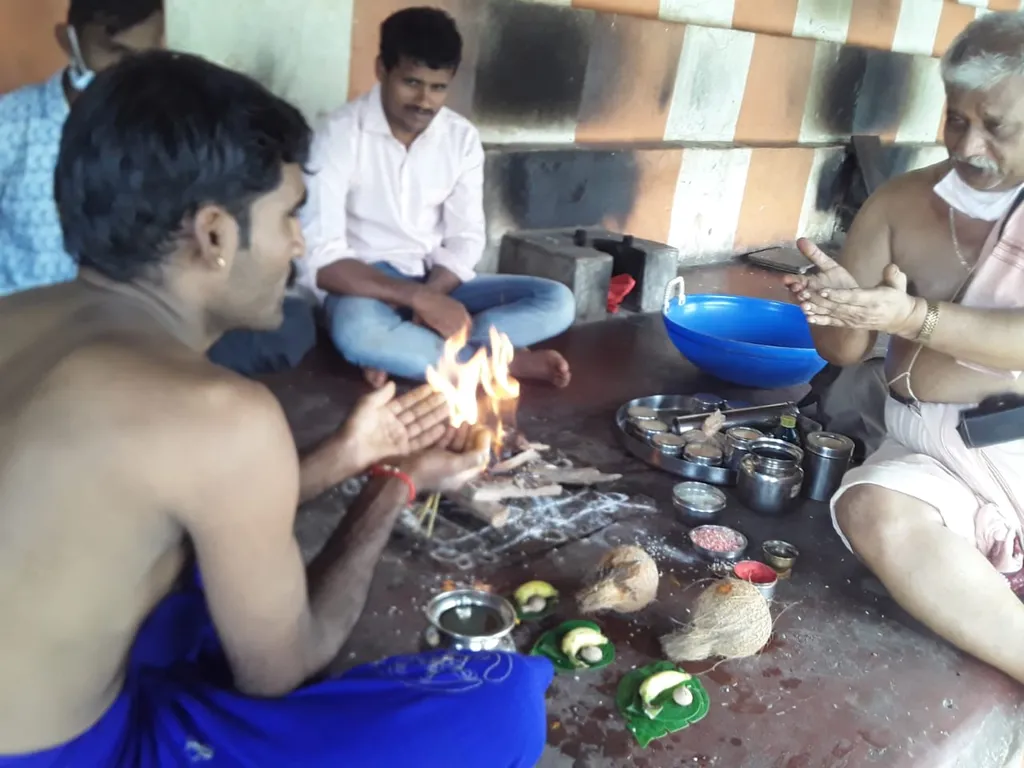
What do Pind Daan and Shraddh rituals look like at Koti Teertha?
Pind daan photographs better than any other rite, because so much of it is visible. The pindas — rounded balls of cooked rice, black sesame and barley — are shaped by hand on darbha grass, offered by name and gotra, and immersed in the teertha. Alongside them the priest performs tila tarpana, water mixed with sesame offered to the pitrus.
Shraddha — written shradh and shraddh at least as often as shraddha — is the wider annual and periodic rite in which those offerings sit: performed on the death anniversary, on Amavasya, and above all during the sixteen days of Pitru Paksha, when the ghats of Koti Teertha are busiest and dates go weeks ahead. Who may perform the offering and how long a sitting runs is on the pind daan at Gokarna page.
What do the Naga Bali and Naga Pratishta rituals involve?
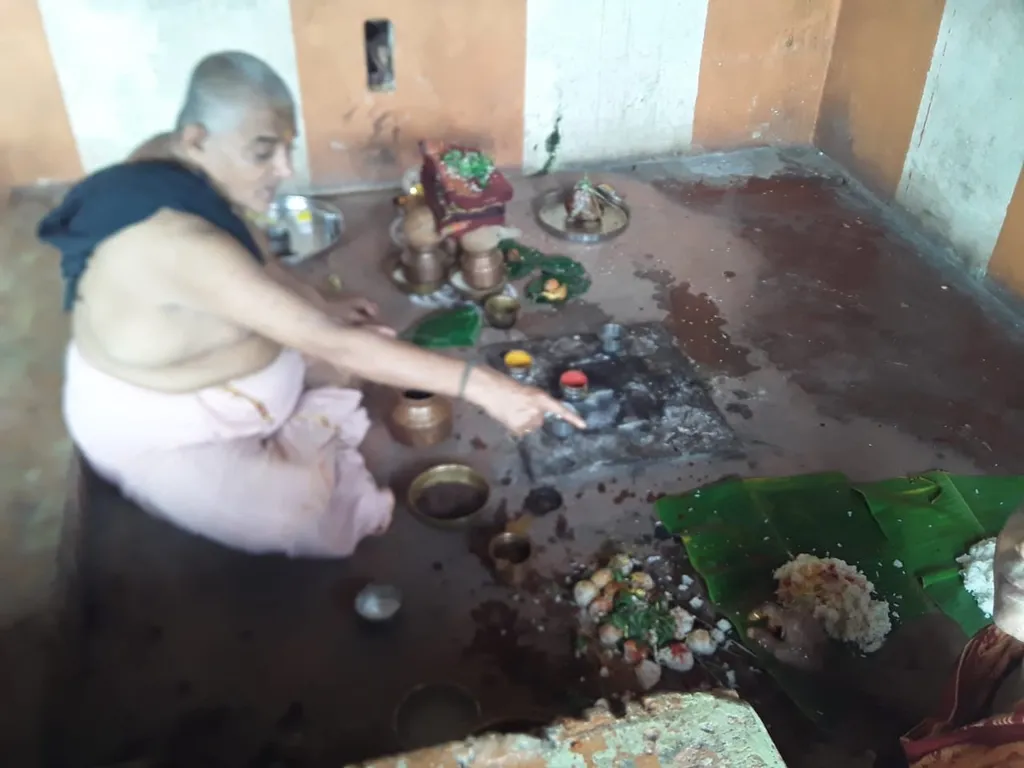
The serpent rites are not represented in this set of photographs yet, and it is better to say so than to show you something else and let you assume. In a Naga Bali puja — spelt nagbali, nagabali and nag bali by different families — a naga idol in silver or clay becomes the focus of abhisheka and offerings before the visarjana that closes the rite, and the sitting runs about three to four hours on a single day. Naga Pratishta, naga pratishte in the Kannada form, is the longer two-day ceremony in which the Naga Devatas are installed and honoured. Devotees usually arrive asking about naga dosha or sarpa dosha and are guided towards one or the other.
Who are the priests in these photographs?
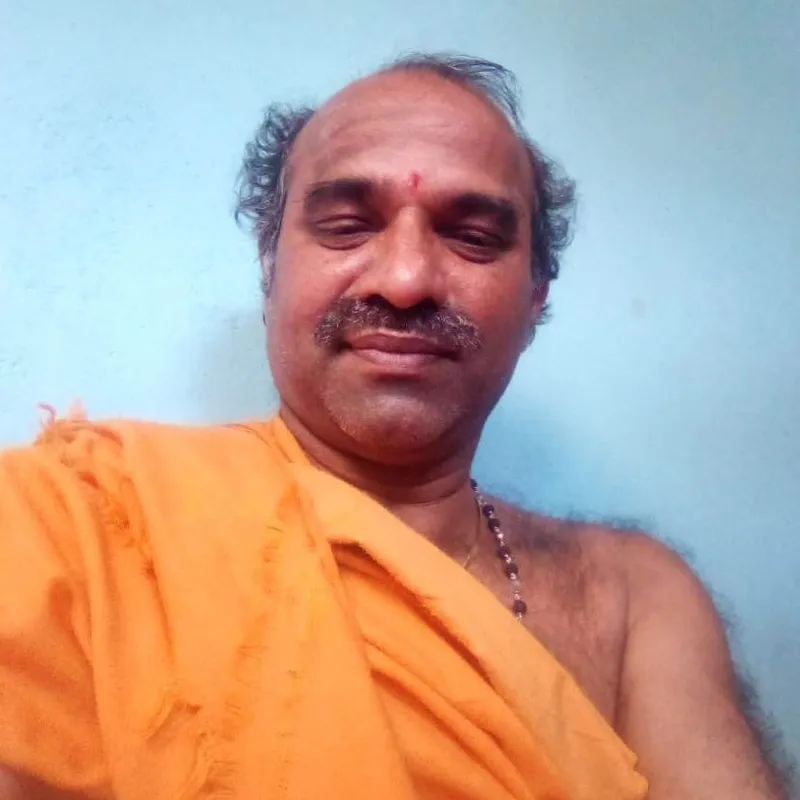
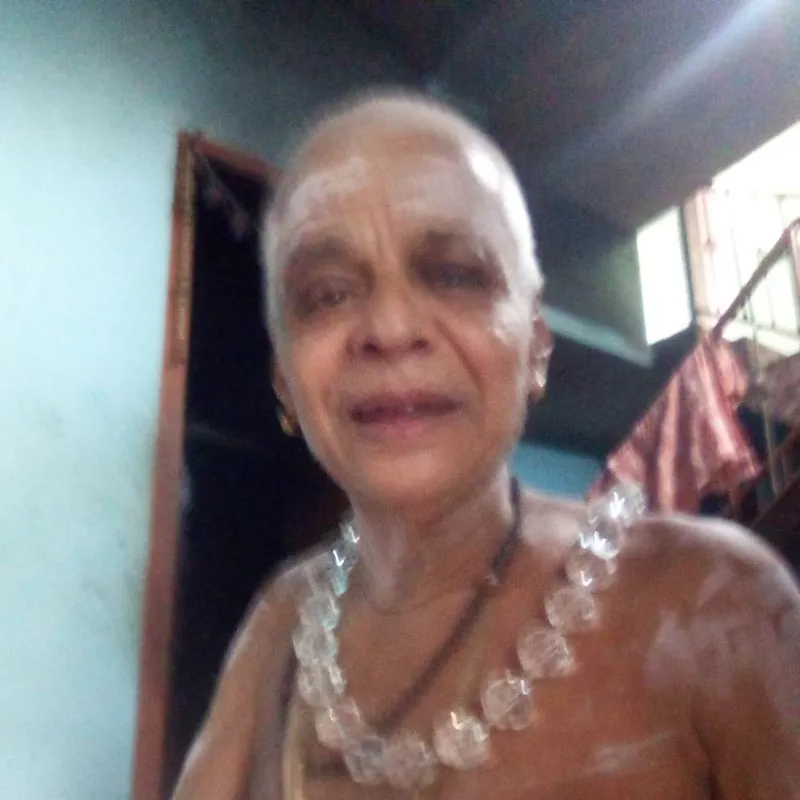
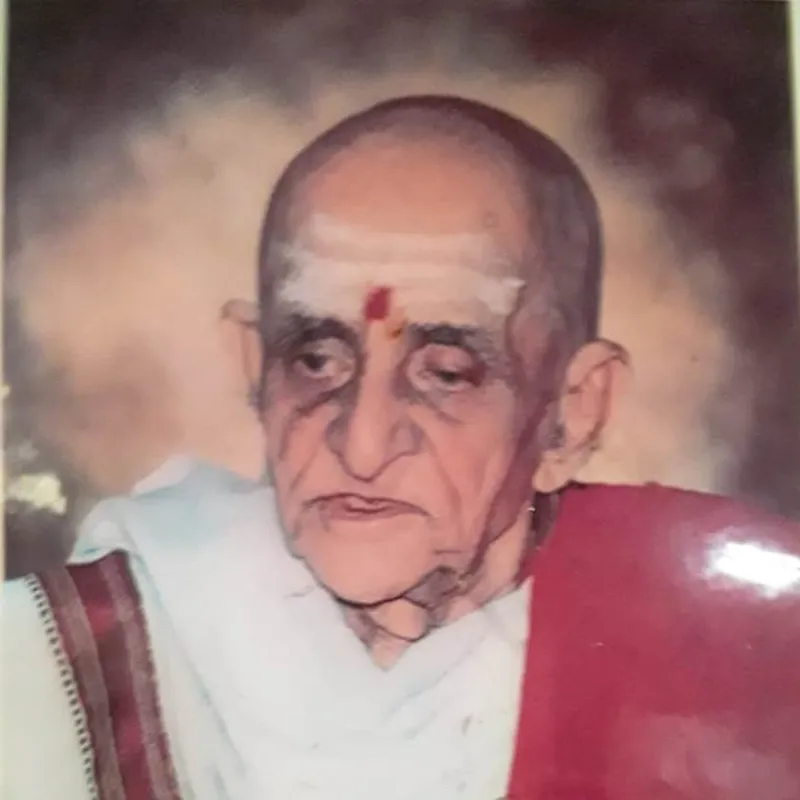
The rituals at Shree Kshetra Gokarna are conducted by Vishweshwar D. Bhat Gurulingaji, Kshetra Gokarna Purohit, together with the priests who assist him. Two of them appear in the portraits below: Shri Shreedhara Adi and Ve. Dwijaraj Upadhya. For a family arriving before sunrise in an unfamiliar town, knowing the faces you will meet at the ghat is often worth more than any picture of the ritual. More about the purohit is on the about the Gokarna purohit page.
What does a pooja day at Gokarna look like?
A ritual day starts early. The family bathes at the teertha and changes into ritual dress, and the purohit takes the sankalpa naming the place, the day, the gotra, the person performing the rite and the departed. From there the puja moves through its prescribed stages — purification, the offerings, the homa where the rite calls for one, and the visarjan that closes it. Most single-day rites run about three to four hours; Naga Pratishta and the combined Narayan Nagbali extend across two to three days. Darshan of Shree Mahabaleshwar is taken after the ritual rather than before it, so reach Gokarna the previous evening and keep the whole morning free.
Can we take photographs or video of our own puja at Gokarna?
Usually yes for your own family's ritual — but say so to the purohit before the puja begins rather than in the middle of it. Photography rules inside a temple compound are set by the temple administration and can change, so follow the notices and the temple staff on the day; the sanctum is a place for darshan, not for cameras. The sankalpa and the homa must not be interrupted, and the priests will say plainly when it is fine to photograph and when the phone should go away. Families who cannot travel often ask whether photographs or a video call can be arranged; that is agreed case by case, so raise it when you book — see online and remote pooja booking at Gokarna.
How do I book the pooja shown in these photographs?
Tell us three things and the rest follows: the name and relationship of the departed, or the reason for the remedial rite; your gotra; and the dates you can be in Gokarna. Vishweshwar D. Bhat Gurulingaji will confirm a suitable tithi, explain the vidhi, and tell you what will be arranged and what it comes to before you travel. We do not print a rate card, because that genuinely depends on the scale of the rite, the samagri and how many priests officiate — what determines the amount is set out on the Gokarna pooja cost page. Call, send a WhatsApp message, or send an enquiry from the contact page.