
Preta Dosha is the affliction Hindu tradition associates with a departed person whose after-death rites were never completed, or who died in a manner the shastras call akaala mrityu — untimely. Such a soul is described as remaining in the preta state: no longer of this world, and not yet joined to the pitrus. South Indian families search for the same condition as Pretha Dosha; in the north it is asked about as pret dosh or pret badha; and the prayer for release from it is Preta Shaapa Vimochana, spoken of also as Pretha Uddhar, the lifting up of the departed.
Most families reach this page after a death that has not settled — an accident, a suicide, a drowning, a death abroad, a body never recovered, or last rites that circumstances forced them to hurry. The rites are conducted in the kshetra around the Shree Mahabaleshwar Temple at Gokarna, where the Western Ghats meet the Arabian Sea and the teerthas lie within walking distance of the temple — the practical reason a family can complete tarpana, pinda visarjana and asthi immersion on a single visit.
Also known as: Pretha Dosha · Preta Shaapa Vimochana · Pret Dosh Nivaran, Pretha Shapa Vimochana, Preta Dosha Parihara, Pretha Uddhar puja
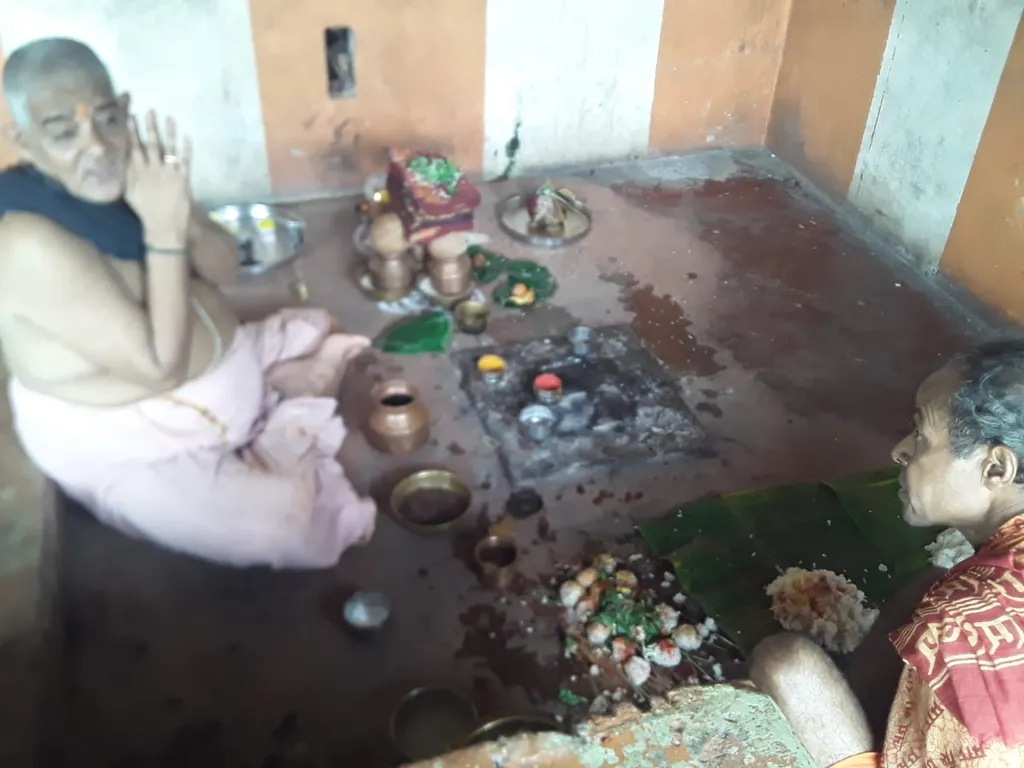
Preta Dosha pooja at Gokarna — at a glance
- Ritual
- Preta Dosha Nivarana / Preta Shaapa Vimochana
- Duration
- 1 day (approx. 3–4 hours)
- Best days & tithis
- Amavasya, Pitru Paksha, and the tithi of the death
- Who should attend
- An immediate family member of the departed
- What we arrange
- Tarpana, pindadan and homa samagri, priests
- Where
- Shree Mahabaleshwar Temple kshetra and the teerthas of Gokarna, Uttara Kannada, Karnataka
- Dakshina
- Varies with the rites included — call +91 83109 37047 for an exact figure
What is Preta Dosha (Pretha Dosha)?
The family's duty does not end at the cremation ground. From the antyeshti onwards a sequence is prescribed: immersion of the asthi in a teertha, the ten- and eleven-day offerings, the sapindikarana that formally joins the departed to the pitrus, and the annual shraddha thereafter. Until that sequence is complete, the departed is described as being in the preta condition, dependent on the offerings of the living. Preta dosha is the name tradition gives to what follows when it is broken — the soul is held to remain in that state, and the family is said to carry the consequence.
The word shaapa, curse, enters when the departed is believed to be not merely unsettled but aggrieved: a death nobody attended, a body never given fire, a deathbed promise never kept. The prayer offered then is Preta Shaapa Vimochana, a kshama prarthana asking forgiveness by name, inserted into the main vidhi. Say plainly what this is not: the rite is not an exorcism and nothing is being driven out. It is the late performance of offerings that were owed, undertaken out of affection for the person who died rather than fear of them.
What causes Preta Dosha?
Traditional priests name two broad causes — a death that was untimely or unnatural, and after-death rites left incomplete. In practice the families who come to Gokarna describe one of the following.
- Akaala mrityu, untimely death — accident, suicide, murder, drowning, fire, snake bite, or death in war or a public disaster. A young death, or one out of the natural order of a family, is treated the same way.
- A body never found or never cremated — drowning at sea, a person long missing and presumed dead, remains that could not be recovered.
- Death far from home or abroad — cremation done in another country or by strangers, with none of the prescribed vidhi possible and the asthi left behind.
- Asthi never immersed — ashes kept at home or in a locker, or immersed without the rites. This is the commonest single gap, answered by asthi visarjan at Gokarna, often on the same visit.
- Antyeshti or shradh hurried, skipped or done without vidhi — distance, family disputes and simple unfamiliarity have left many rites half-finished in the last generation.
- Death without descendants, or a death nobody can date — a person who left nobody to perform the annual shraddha, or a relative who went away and was never heard of again.
None of this is a moral failing, and a purohit worth consulting will not treat it as one. These are gaps, and the vidhi exists so that a gap can be closed later.
Call +91 83109 37047 (Vishu Guruling) for all Gokarna pooja details
WhatsApp UsWhat are the symptoms of Preta Dosha in a family?
Families rarely arrive with a horoscope. They arrive with a pattern of unrest that began, or seemed to begin, around a death. Read the signs below as prompts to check whether the rites for that person are complete — not as a diagnosis, and not as proof that anything is wrong with your family.
- Repeated dreams of the departed, especially dreams in which they appear hungry, thirsty, unclothed or asking for something. Tradition reads these as a reminder that offerings are due.
- A house that has not settled — heaviness or unrest at home since the death, disturbed sleep, children frightened without cause.
- Recurring illness or accidents in the same household — complaints properly treated that keep returning.
- Matters that stall at the final step — marriages, jobs, visas, property registrations or agreements that appear settled and then fall through.
- Discord dating from the death — estrangement between siblings, quarrels that circle back to the funeral, the will or the ancestral property.
- An unfinished feeling — the family's own sense that something was left undone. This, more than any other sign, is what brings people to Gokarna.
Before agreeing that pret badha is involved, a responsible priest asks a plainer question: were the antyeshti, the asthi visarjan and the shraddha of that person performed, and performed with the vidhi? If not, that gap is what the nivarana rite addresses. Medical, legal and financial matters deserve their own proper attention alongside — a puja is offered for the peace of the departed, not in place of a doctor or a lawyer.
Is Preta Dosha the same as Pitru Dosha?
They are constantly confused, and booking the wrong rite helps nobody. Preta dosha concerns one named individual; the whole vidhi is directed at that person, by name and gotra, to carry them out of the preta state and join them to the ancestors. Pitru dosha, or pitra dosh, concerns the lineage as a whole — three generations whose shraddha and tarpan have fallen into arrears — and is answered by rites offered to the line rather than to one soul. The two are connected: a preta never given the prescribed offerings is traditionally held never to join the pitrus at all, so a preta dosha left unaddressed in one generation is described as becoming a pitru dosha in the next. Where a family carries both, the preta rites are normally performed first. Naga dosha and sarpa dosha are a separate matter altogether, arising from a wrong done to the serpent deities.
Which poojas are performed for Preta Dosha at Gokarna?
There is no single ritual called "preta dosha". The nivarana is a sequence, assembled for the specific death concerned. At Gokarna the components most often prescribed are these:
- Sankalpa and kshetra shuddhi — the formal resolve, taken in the name and gotra of the departed and of the yajamana, with the purification rites that precede the main pooja.
- Preta shraddha and pindadan — rice pindas offered to the departed and afterwards given to the teertha. This is the heart of the rite; pilgrims have long come to the Mahabaleshwar temple to perform pinda daan for their departed.
- Tarpana (tarpanam) — water mixed with til, black sesame, and other prescribed substances, offered through darbha grass. The tarpan pacifies the preta condition and is repeated at several points in the day.
- Thila Homam (Tila Havana) — the sesame fire offering for the purification of the departed, among the most frequently prescribed parts of a preta dosha parihara.
- Preta Shaapa Vimochana prarthana — the kshama prarthana asking forgiveness by name, where a specific grievance is believed to be involved.
- Moksha Narayana Bali — where the death was untimely or the body never given fire, this rite is prescribed to release the soul from the preta state itself. It is the commonest addition, and the reason many families stay more than one day.
- Tripindi Shraddha — where the shraddha of three generations lapsed along with the rites of the individual, the three-pinda rite is done for the line as well.
- Brahmana bhojana and daana — feeding and gifting at the close, which the shastras treat as the part through which the offering reaches the departed.
Which of these apply is settled in conversation before a date is fixed — never improvised on the morning of the pooja.
Preta Dosha Nivarana procedure step by step
The vidhi below is the ordinary shape of the day. Order, mantras and the number of pindas vary with the family's sampradaya and with what the purohit finds missing in the rites already performed.
- Snana and achamana at the teertha, with traditional dress worn by everyone taking part.
- Sankalpa — the yajamana states his name, gotra, the place, the tithi and the purpose: preta dosha nivarana and, where applicable, preta shaapa vimochana for the person named.
- Kshetra vidhi and punyahavachana — purification of the place, the vessels and the participants.
- Avahana of the departed — the preta is invoked by name and gotra, with darbha and til placed as the shastra prescribes. Where the body was never recovered, a symbolic representation is used.
- Preta shraddha and pindadan — the pindas are shaped and offered with the prescribed mantras.
- Tarpana — the water and til offering, made to the departed and, where the vidhi includes it, to the ancestral line.
- Til homa — the fire offering with sesame, ghee and samidha, the preta and pitru mantras recited by the officiating priests.
- Kshama prarthana — the formal request for forgiveness, in which the family acknowledges aloud what was left undone.
- Visarjana — the pindas are given to the teertha, asthi are immersed where that is part of the visit, and the departed is respectfully taken leave of.
- Brahmana bhojana, vastra and daana — feeding, and the giving of cloth and daana, which conclude the rite.
The yajamana sits through the whole vidhi with the purohit. The mantras are recited by the officiating priests; you repeat the sankalpa and make the offerings with your own hands, which is the part that matters. Everything is explained in Kannada, Hindi or English as the family prefers.
How many days does the Preta Dosha puja take?
The rite is normally completed in 1 day (approx. 3–4 hours), from the morning sankalpa to the concluding daana. Families are usually advised to reach Gokarna the previous evening so the puja can begin early, unhurried, with time for snana at the teertha. Where Moksha Narayana Bali is prescribed alongside the nivarana — common when the death was untimely — the visit runs to two or three days, and where asthi visarjan is also to be done, allow extra time on the arrival or departure day. You are told the full length of the visit when the vidhi is decided, before travel is booked.
Who should perform the Preta Dosha rituals?
The yajamana should be an immediate family member of the departed. By custom the son takes that place, and where there are several the eldest sits with the others present. Where there is no son, the shastras allow a grandson, a brother, a nephew, a daughter or a daughter's son, a widow, or the nearest sagotra relative to perform the rite in his place — no family is left without a remedy for want of a male heir. Gotra matters, since the sankalpa names the gotra of the departed; where it has genuinely been forgotten, the shastras provide a standard substitute and the rite proceeds. Where the yajamana is married, husband and wife normally sit together for the homa.
When is the best time for Preta Shaapa Vimochana pooja?
The traditional windows are Amavasya, Pitru Paksha. Amavasya, the new moon, is the standing day of the departed in every month; the Mahalaya Pitru Paksha fortnight is the most auspicious period of the year for such karya, and within it Sarva Pitru Amavasya is asked for most often — notably because it is the prescribed day for those whose date of death is unknown, which is exactly the situation in many preta dosha cases. The tithi of the person's own death is used where it is known. The rite is not restricted to these days: where a death is recent or a family distressed, a date is fixed as soon as the panchanga allows rather than making them wait for the fortnight.
What does Preta Dosha pooja at Gokarna cost?
No rate card is published here, and you should be wary of any figure quoted before your situation is known. The dakshina for preta dosha nivarana depends on which rites the vidhi includes — a preta shraddha with tarpana is a smaller undertaking than the same rite with Moksha Narayana Bali added — on how many priests officiate, on the samagri the homa requires, and on whether brahmana bhojana and daana are arranged through us.
What is arranged for you is tarpana, pindadan and homa samagri, priests, so a family arriving from outside Karnataka need not source anything locally. Call +91 83109 37047 or +91 88613 21496, describe the death and what rites were or were not performed, and you will be given the complete figure before you commit to travel. For how the amount is worked out, see pooja cost at Gokarna.
What to bring — samagri, fasting rules and dress code
Bring the name and gotra of the departed, the date of death if known, and the name of the person who will sit as yajamana. A photograph is not required, though families often bring one. If asthi are to be immersed on the same visit, say so when you book, because that changes the order of the day. If a jyotishi or an elder has already said which rite is prescribed, repeat it, and the vidhi is framed to match.
The pooja samagri is arranged here — til, darbha, rice for the pindas, ghee, samidha, kalasha, cloth and the vessels for tarpana. Traditional dress is expected: dhoti or veshti for men, saree or a traditional outfit for women. Satvik food, free of onion and garlic, is normally observed from the previous day, and the yajamana usually eats only after the rite concludes. Leather is left outside the ritual area. Ask whether temple darshan should be taken before or after the puja; for some vidhis the order matters.
Why perform Pretha Uddhar rites at Gokarna?
Gokarna is spoken of as Dakshina Kashi, the Kashi of the south, and as a mukti kshetra — a place where rites for the departed are traditionally held to carry particular weight. Families on the western side of the country come here rather than travel to Gaya, Kashi, Trimbakeshwar or Rameshwaram simply because it is the nearest of the great kshetras for this karya: devotees arrive from Karnataka, Maharashtra, Goa, Andhra Pradesh, Telangana and Kerala, and from families settled abroad who return for the rite.
The practical reasons matter as much. The teerthas and the sea lie within walking distance of the temple compound, so preta shraddha, pinda visarjana, tarpana and asthi immersion can all be completed in one visit instead of across several towns. Besides the Shree Mahabaleshwar Temple, the kshetra holds the Maha Ganapati temple and the Shri Bhadrakali temple, at which pilgrims take darshan on the same visit. And the rites are performed at Gokarna in Uttara Kannada district of Karnataka — not the Mahabaleshwar hill station in Maharashtra, and not Gokarna in Nepal, both of which families confuse with this kshetra when searching. If you have not been here before, this introduction to Gokarna is the place to start.
How to book Preta Dosha Nivarana Pooja at Gokarna
Booking begins with a conversation, not a form. Call Vishweshwar D. Bhat Gurulingaji, Kshetra Gokarna Purohit, on +91 83109 37047, or message the same number on WhatsApp, and describe what happened: the death and its circumstances, which rites were performed and which were not, whether the asthi were immersed, and the dates your family can travel. You will be told which vidhi is prescribed, how long the visit takes and what it costs, before anything is confirmed. Guidance on where to stay is given at the same time, so say how many people are travelling. If illness, distance or age makes travel impossible, ask about booking a pooja at Gokarna online — the sankalpa is then taken in the name and gotra of the departed and of the yajamana, and the rite performed here on the family's behalf.
Devotees undertake preta dosha nivarana seeking peace for someone they loved and a settling of what was left undone. The shastras describe the rite as the completing of an obligation and the carrying of the departed from the preta state to the pitrus, and it is best approached in that spirit — as an act of remembrance and duty, not as a transaction with a guaranteed result.
Frequently asked questions
What are the symptoms of Preta Dosha?
What causes Preta Dosha?
Which pooja is performed for Preta Dosha at Gokarna?
Is Preta Dosha the same as Pitru Dosha?
How many days does the Preta Dosha pooja take?
What is the cost of Preta Dosha pooja at Gokarna?
Can Preta Dosha pooja be performed for someone who died abroad, or whose body was never found?
Who in the family should perform the Preta Dosha rituals?
When is the best time of year to perform Preta Dosha pooja?
Related poojas at Gokarna
Rites commonly performed alongside preta dosha nivarana, or in its place when the situation calls for a different vidhi.
Moksha Narayana Bali Pooja
Sacred ritual to free departed souls from the cycle of rebirth and help them attain moksha.
Pitru Shaapa
Remedial rituals to relieve the curse of dissatisfied ancestors and restore harmony.
Pind Daan
Pinda offerings and tarpana at Koti Teertha for the peace and liberation of departed ancestors.
Perform Preta Dosha at Gokarna
Speak to Vishweshwar D. Bhat Gurulingaji for auspicious dates, the vidhi procedure and complete arrangements for your visit.