
Koti Teertha — the Gokarna Lake Where Every Pooja Begins
The sacred tank beside Shree Mahabaleshwar Temple, where the holy dip, the sankalpa, tarpana and pind daan of Gokarna are performed.
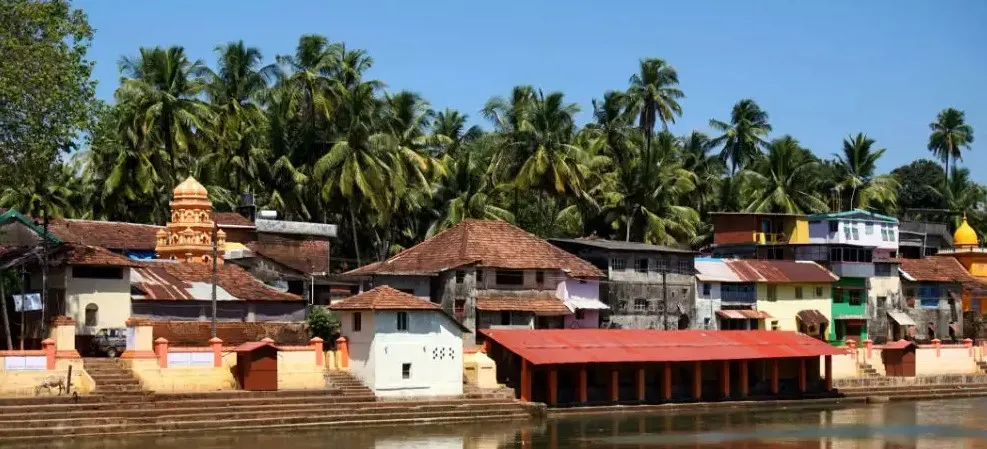
Koti Teertha is the sacred temple tank of Gokarna — the water most people mean when they search for the Gokarna lake — and it lies a short walk from the sanctum of Lord Mahabaleshwara. It is traditionally used for ritual bathing before darshana and for immersion ceremonies, and it is ringed by ghats, small shrines and the old houses of the temple town. For a family arriving to perform ancestral rites it is not scenery. It is where the day begins: the snana is taken here, the sankalpa is spoken on these steps, and the tarpana, shraddha and pind daan of this kshetra are performed on the ghats around the tank.
What is Koti Teertha, the sacred lake at Gokarna?
Koti Teertha is a stepped temple tank in the heart of the old town, close enough to Shree Mahabaleshwar Temple and its Atmalinga that a family can bathe, change and reach the sanctum in the same morning. Devotees write the name in several ways — Koti Teertha, Kotiteertha, Kotitirtha — and pilgrims who do not know the name at all simply ask for the Gokarna temple pond. All of them mean this one tank.
Its water is treated as teertha: water fit for ritual use. That is why the purohits of the kshetra draw from it for the sankalpa and the tarpan rather than from any convenient tap, and why the etiquette around the tank is strict. You enter the water for snana, not for swimming; soap and shampoo have no place in a teertha; and a family sitting on the ghat in the middle of its own pooja is not a photograph to be taken without asking.
Why is it called Koti Teertha, and what does the name mean?
Koti means a crore — ten million. The sthala purana of the kshetra holds that a koti of sacred waters gathered into this single tank, so that a bath here is traditionally held to carry the merit of bathing in all of them. The Gokarna Mahatmya preserved in the Skanda Purana is the text purohits cite: the same text that describes the Atmalinga being set down on this shore by Ravana and refusing to be lifted again, the episode that gives Gokarna its standing as Bhookailasa and as Dakshina Kashi, the Kashi of the south. More on the kshetra and its titles is in our introduction to Gokarna.
The older accounts name other waters alongside the main tank — Rudra Teertha, Bhadra Teertha and the Tamra Parni among them — and treat the meeting of the coastal rivers with the Arabian Sea as a teertha in its own right. If your family tradition names a particular teertha for its shraddh, say so when you call and the purohit will tell you whether the rite can be performed there.
Call +91 83109 37047 (Vishu Guruling) for all Gokarna pooja details
WhatsApp UsIs a holy dip at Koti Teertha compulsory before a pooja?
For pitru karya the answer is effectively yes. The shastras place teertha snana before the sankalpa, and at Gokarna that snana is taken at Koti Teertha. The bath is not about cleanliness; it marks the moment the person performing the rite sets down ordinary business and enters the day as the karta, fit to speak his ancestors' names. Many families take three immersions, with the priest reciting the snana sankalpa on the steps.
Where age, illness, injury, pregnancy or a woman's monthly cycle makes the dip impossible, tell the priest beforehand. The tradition provides for it: teertha jala drawn from the tank is sprinkled over the person as prokshana, and the puja proceeds. Nobody is kept from their own ancestors' rite for want of a bath.
Which poojas at Gokarna begin at Koti Teertha?
Almost every ancestral ritual we perform starts with the snana at this tank, and several are performed on its ghats from beginning to end:
- Moksha Narayana Bali — the Narayan Bali puja for the release of a departed soul, begun with the teertha snana and sankalpa.
- Narayan Nagbali pooja at Gokarna — the combined Narayana Nagabali rite, opened at the tank on each of its days.
- Tripindi Shraddha — the three-pinda shradh for three ancestral generations, whose pindas are offered and immersed here.
- Pind daan and tarpana at Koti Teertha — pinda daan on the steps of the tank, on Amavasya, on a death anniversary or on any day the family can travel.
- Asthi visarjan — the immersion of the ashes, at the teertha or at the sea.
- Naga Bali and the other nagbali rites, and Pitru Paksha shraddha, tarpan and pind daan during the Mahalaya fortnight, when the ghats are busiest.
The complete list is on our Gokarna pooja services page.
Are tarpana and pind daan performed at Koti Teertha?
Yes — these are the two rites the ghats see most. Tila tarpana is the offering of water mixed with black sesame, poured through the fingers in the pitru tirtha manner for the pitrus, the deva-pitrus and the rishis in turn. Devotees write it tarpan or tarpana depending on where they come from; the offering is the same. Pind daan follows: pindas of cooked rice, tila and barley, offered on darbha grass by name and gotra, then immersed in the teertha or carried down to the shore.
Families who have come to release ashes perform the visarjan either in this tank or in the sea at Gokarna's shore, and the purohit confirms which water is used before you set out. Families who suspect an ancestral obstruction — pitru dosha nivarana in the south, pitra dosh nivaran in the north — begin here too, since the remedial Pitru Shaapa rites open with the same snana and sankalpa.
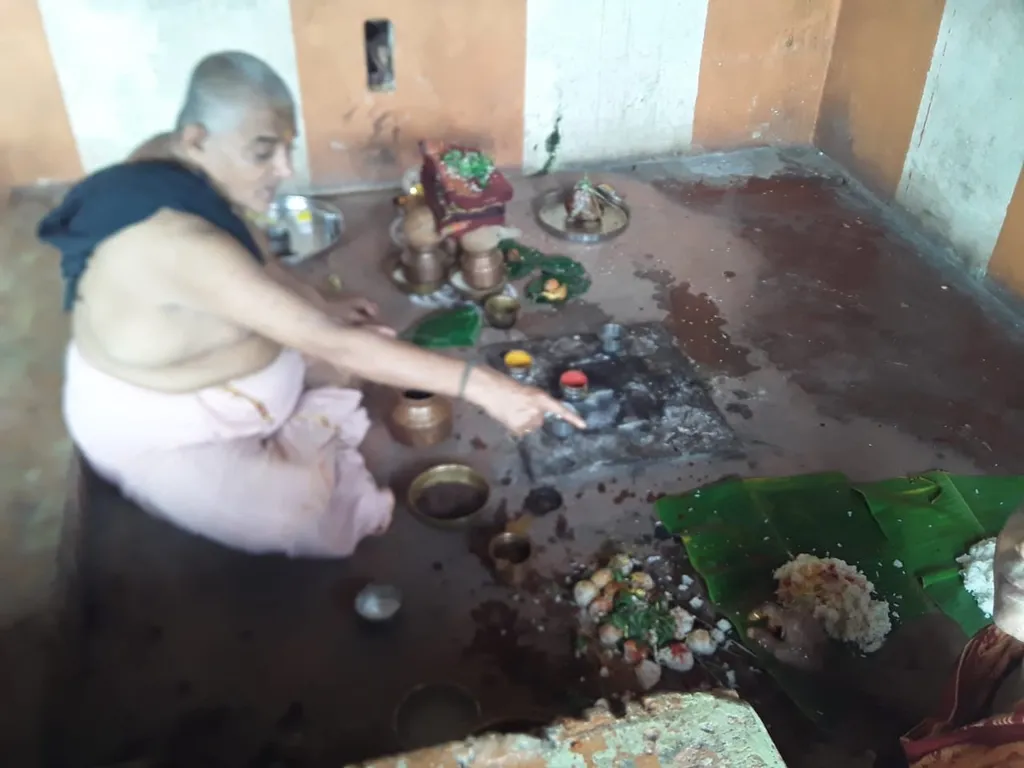
Koti Teertha snana step by step — what happens on the day
- Reach the tank early. Ancestral rites are morning rites, and the purohit will give you a time to be there.
- Leave footwear and belongings where the priest directs, and go down to the steps.
- Take the snana — the ritual dip, with the snana sankalpa recited for you.
- Change into ritual dress — dhoti and angavastra for the karta, saree or simple traditional dress for the family.
- Achamana and sankalpa on the ghat, naming the place, the day, the gotra, the person performing the rite and the departed.
- The rite itself — tila tarpan, pinda pradana, homa or visarjan, according to what has been arranged.
- Darshan afterwards. The temple is visited after the ancestral rite is complete, never before it.
What should I wear and carry for Koti Teertha snana?
Keep it simple and traditional: a dhoti and angavastra for the person offering, a saree or plain traditional dress for the women of the family, a towel, a change of dry clothes and a bag for the wet ones. Bring the ancestor's name, the gotra and the tithi of passing if you have it — that is what the sankalpa needs. Keep the day satvik, without onion, garlic or alcohol; the karta usually fasts until the rite is finished.
Where is Koti Teertha, and how do I reach it?
Koti Teertha sits inside the old town of Gokarna in Uttara Kannada district, Karnataka — a short walk from the Mahabaleshwar temple, with the shore a few minutes further on. The tank, the temple street and the sea are all within walking distance of one another, which is why the whole sequence of snana, puja and darshan fits into one morning. Our priests tell each family where to assemble and walk with them to the ghat.
How to arrange a pooja that begins at Koti Teertha
Call or message with four things: the name and relationship of the departed, the gotra, the tithi of passing if it is known, and the dates you can be in Gokarna. Vishweshwar D. Bhat Gurulingaji, Kshetra Gokarna Purohit, will confirm a suitable day, tell you what the rite involves, and give you the dakshina for your sankalpa before you travel — what decides it is set out on our Gokarna pooja cost page. During Pitru Paksha, book several weeks ahead. If you cannot travel, the sankalpa can be taken in your name and the rite performed here on your behalf; see online pooja booking at Gokarna, or send us your details.
Frequently asked questions
What is Koti Teertha in Gokarna?
Is a bath at Koti Teertha compulsory before the pooja?
Are tarpana and pind daan performed at Koti Teertha?
Which teertha is used for asthi visarjan at Gokarna?
How far is Koti Teertha from the Mahabaleshwar Temple?
What should I wear for Koti Teertha snana?
Are there changing rooms at Koti Teertha?
Can women and children take the dip at Koti Teertha?
Can I visit Koti Teertha without booking a pooja?
Rituals performed at Koti Teertha
The poojas families most often come to this tank for.
Call +91 83109 37047 (Vishu Guruling) for all Gokarna pooja details
WhatsApp Us