
Kaal Sarp Dosh Nivaran Pooja — asked for by devotees as kalsarp dosh nivaran puja, kaal sarpa dosha parihara, kalasarpa shanti or simply kal sarp yog puja — is the Rahu-Ketu remedial rite performed in the compound of Shree Mahabaleshwar Temple at Gokarna, in Uttara Kannada district of Karnataka. People come for it after an astrologer has read their janma kundali and told them that every graha in the chart falls on one side of the axis formed by Rahu and Ketu.
The rite is conducted by Vishweshwar D. Bhat Gurulingaji, Kshetra Gokarna Purohit, together with our priests, following the Vedic sequence of graha shanti and naga aradhana as it is observed at this kshetra. Gokarna's standing as a place of remedial rites is the reason devotees travel here instead of to a temple nearer home — the Atmalinga and the shrine itself are described on our Gokarna Mahabaleshwar Temple page. What follows sets out what the dosha is said to be, the twelve types astrologers name, the vidhi we follow, and how to arrange the puja.
Also known as: Kaal Sarpa Dosha, Kalsarp Dosh, Kal Sarp Yog, Kala Sarpa Dosha Parihara.
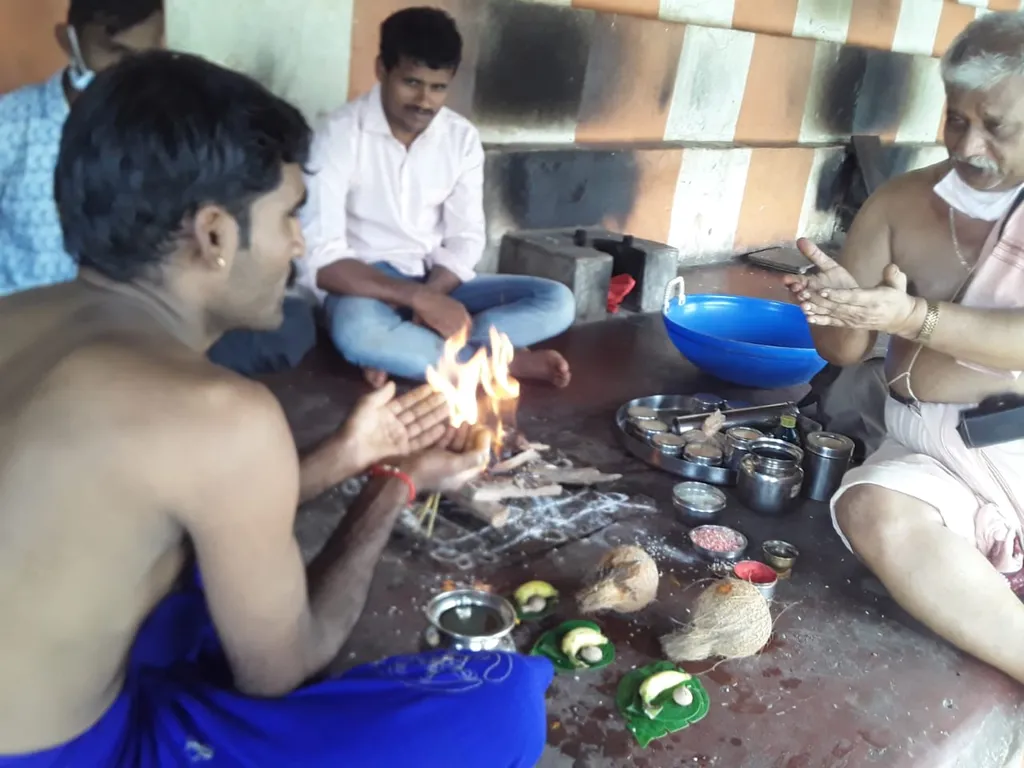
What is Kaal Sarp Dosh (Kaal Sarpa Dosha) in a horoscope?
Rahu and Ketu are the two chhaya grahas of jyotisha — the shadow points where the paths of the sun and the moon cross. They always sit exactly opposite one another, so a line drawn between them cuts the birth chart in two. When all seven remaining grahas — Surya, Chandra, Mangala, Budha, Guru, Shukra and Shani — are found on one side of that line, the chart is read as carrying Kaal Sarp Dosh. Rahu is spoken of as the serpent's head and Ketu as its tail, and the horoscope is described as lying within its coils: kaal, time, and sarpa, serpent.
The same configuration is named differently across India, and every form of the name is in daily use. North Indian devotees say kaal sarp dosh, kalsarp dosh or kal sarp yog and ask for nivaran or shanti. In the South the same thing is called Kaal Sarpa Dosha or Kala Sarpa Dosha, and the remedy is asked for as parihara or nivarana. Some astrologers distinguish it further as udita or anudita — ascending, where the grahas lie in the direction of Rahu's movement, and descending, where they follow Ketu. Where one graha falls just outside the axis, the chart is often called aanshik or partial kaal sarp yog rather than the full dosha.
One thing is worth stating plainly. The term as it is used today does not appear under this name in the older Sanskrit jyotisha classics; it came into wide currency through later astrological practice, and its interpretation varies between schools. What is genuinely old is the worship of the nagas and the shanti rites for Rahu and Ketu, and those are what the pooja at Gokarna consists of. Devotees perform it seeking shanti and the grace of the naga devatas.
Call +91 83109 37047 (Vishu Guruling) for all Gokarna pooja details
WhatsApp Us| Ritual | Kaal Sarp Dosh Nivaran Pooja (Kalsarp Puja / Kaal Sarpa Dosha Parihara) |
|---|---|
| Duration | 1 day (approx. 3–4 hours) |
| Best days & tithis | Panchami, Amavasya, Naga Panchami |
| Who performs it | The person with the dosha in their horoscope |
| What we arrange | Rahu-Ketu homa samagri, naga idols, priests |
| What you bring | Your birth details and the astrologer's reading, if you have one |
| Where | Shree Mahabaleshwar Temple compound, Gokarna, Uttara Kannada, Karnataka |
| Dakshina | Not a fixed package rate — quoted on the call once the scale of the rite is known |
| Booking | +91 83109 37047 or +91 88613 21496 |
What are the 12 types of Kaal Sarp Dosh?
Astrologers name twelve varieties of kaal sarp yog, one for each house in which Rahu is placed, with Ketu always in the seventh house from it. Each is named after a serpent of the puranic tradition. The names below are the ones you will hear from a jyotishi; the third column gives the areas of life those houses traditionally govern — that is a description of the classical scheme, not a prediction about your life.
| Type | Rahu → Ketu | Houses on the axis |
|---|---|---|
| Anant | 1st → 7th | Self and body; marriage and partnership |
| Kulik | 2nd → 8th | Family, speech and wealth; longevity and inheritance |
| Vasuki | 3rd → 9th | Courage and siblings; fortune, dharma and father |
| Shankhpal | 4th → 10th | Home, land and mother; profession and standing |
| Padma | 5th → 11th | Progeny and learning; gains and elder siblings |
| Mahapadma | 6th → 12th | Debts, illness and rivalry; expenditure and travel |
| Takshak | 7th → 1st | Marriage and partnership; self and body |
| Karkotak | 8th → 2nd | Longevity and inheritance; family and wealth |
| Shankhachud | 9th → 3rd | Fortune and father; courage and siblings |
| Ghatak | 10th → 4th | Profession and standing; home and mother |
| Vishdhar | 11th → 5th | Gains and networks; progeny and learning |
| Sheshnag | 12th → 6th | Expenditure and moksha; debts and illness |
You do not need to work out which type applies before you call. If a jyotishi has named one — Anant, Takshak, Sheshnag or any other — tell us, because the sankalpa is worded accordingly and the japa count is fixed with it in view. If no type was named and you simply know the dosha was mentioned, that is enough to begin.
What are the symptoms people associate with kal sarp yog?
The difficulties devotees describe when they call are consistent enough to be worth setting down: work that begins well and stalls without an ordinary explanation, delay in marriage, financial strain that never quite resolves, disturbed sleep or recurring dreams in which serpents appear, a sense of obstruction that the family cannot account for, and litigation or disputes that drag on. In the astrological reading, Rahu and Ketu are also connected with sudden reversals and with matters that surface unexpectedly.
These are the indications tradition associates with the dosha, and they should be understood in exactly that spirit. They are not a diagnosis, they overlap with ordinary human difficulty, and none of them proves that a chart carries kaal sarpa dosha — only a reading of the horoscope does that.
A note on how we speak about this puja. Kaal Sarp Dosh Nivaran Pooja is performed as an act of faith and traditional observance. We do not promise cures, wealth, marriage, children or any other outcome, and we would ask you to be cautious of anyone who does. Where a matter is medical, legal or financial it needs proper professional attention alongside, not instead of, the rite. What we undertake is that the vidhi will be performed correctly, completely and with the mantras it calls for.
Who should consider Kaal Sarp Dosh Nivaran Pooja at Gokarna?
The person whose horoscope carries the dosha is the one who takes the sankalpa, and it makes no difference whether that person is married or unmarried, young or elderly. The family attends and receives the teertha and prasadam at the close. Where the dosha has been read in a child's chart, a parent takes the sankalpa on the child's behalf, and where husband and wife are both concerned they commonly sit together.
Practice differs genuinely between families, sampradayas and regions. Rather than have you travel on an assumption, describe your situation on the phone — whose chart it is, what the jyotishi said, whether a type was named — and Gurulingaji will tell you who should be present. The Gokarna pooja enquiry form takes the same details in writing, and our full list of Gokarna pooja and puja services shows the other rites performed here.
Kaal Sarp Dosh nivaran puja vidhi step by step
The vidhi is a graha shanti joined to naga aradhana, and the whole of it is completed on a single morning.
- Snana and purification. The family bathes before the rite begins; many take the traditional dip at Koti Teertha, the sacred tank at Gokarna, where the remedial rites of this kshetra customarily begin.
- Ganapati pooja and punyahavachana. The obstacles are addressed first and the place, the vessels and the participants are purified with the prescribed mantras.
- Sankalpa. The person performing the puja states the resolve aloud with the priest, naming the gotra, the nakshatra, the family and the kaal sarpa dosha for which the parihara is being undertaken.
- Kalasha sthapana. The kalasha is established and the deities are invoked into it for the duration of the rite.
- Rahu and Ketu shanti. The two chhaya grahas are worshipped in their own forms and the japa of their mantras is performed for the count fixed at the time of booking.
- Naga aradhana and abhisheka. A naga murti in silver or clay is installed and bathed with milk, turmeric, sandal and the other prescribed dravyas, with the sarpa sukta and naga mantras chanted throughout.
- Homa. The offerings laid down for Rahu, Ketu and the nagas are made into the fire, with til, ghee and the samidha appropriate to each.
- Tarpana and visarjana. Water offerings are made, and the naga murti is respectfully immersed, releasing the invoked presence at the close.
- Daana and prasadam. The customary daana is given and the family receives teertha and prasadam before leaving the compound.
Our priests explain each stage as it happens, in Kannada, Hindi or English, so the family understands what is being offered and why. Where the kalsarp puja forms part of a longer sequence of rites, the order of the days is planned in advance so nothing is done out of sequence.
How long does the kalsarp puja take at Gokarna?
Kaal Sarp Dosh Nivaran on its own is a one-day rite and the ritual portion runs to roughly three to four hours, starting in the morning after the purificatory bath. The exact starting time is fixed when your date is confirmed, since it depends on the tithi, on the temple's own observances that morning and on how many rituals your family is performing.
Families travelling a long distance usually arrive the previous evening so the morning is unhurried, and many priests advise keeping the temple darshan for the day after the puja rather than the same morning. If you are combining the kalasarpa shanti with Naga Bali Pooja for sarpa dosha at Gokarna, plan for a two-day stay.
Which day or tithi is best for Kaal Sarp Dosh Nivaran Puja?
Panchami tithi is the traditional choice for anything addressed to the nagas, and Naga Panchami in the month of Shravana is the most sought-after date of the year for this puja. The Mondays of Shravana are also observed, and Amavasya is taken by many families, particularly where the kaal sarp remedy is being performed alongside rites for the ancestors.
Those dates are not a restriction. If work or travel means you can only come at another time, the panchanga is consulted and a suitable muhurta is fixed for the day you are able to reach Gokarna. Because Shravana and the Pitru Paksha fortnight are the busiest periods here, families who want a date inside those windows should call well ahead rather than arrive and hope for a slot.
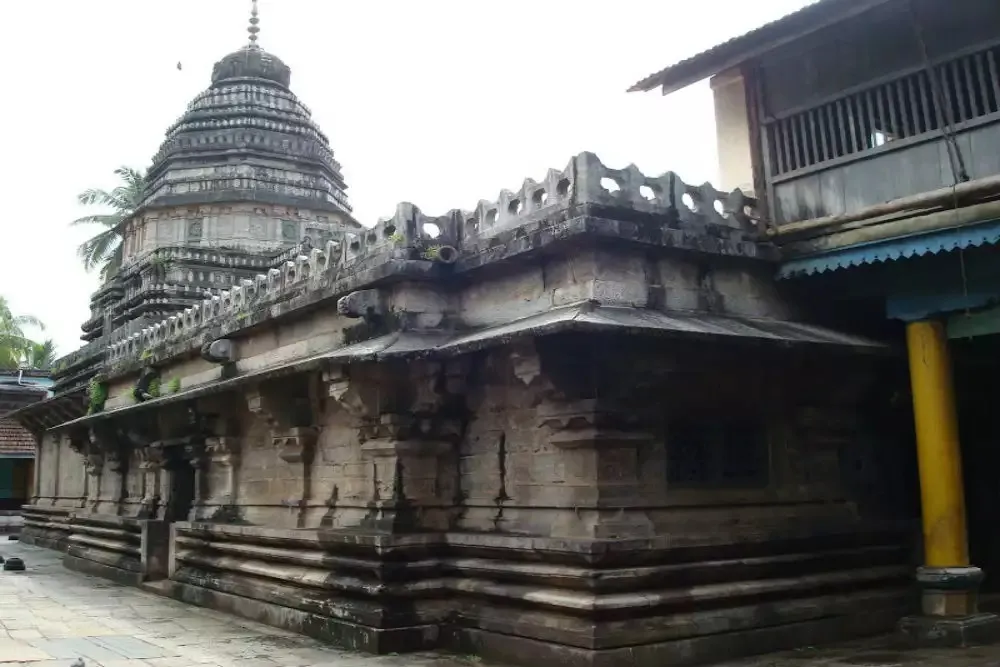
Kaal sarp dosh puja in south india — Gokarna or Trimbakeshwar?
This is the question we are asked most often, and it deserves a fair answer rather than a sales pitch. Trimbakeshwar in Nashik is the name most people in Maharashtra and North India know for kalsarp shanti, and it is a genuine jyotirlinga kshetra where the rite has long been performed. Nothing here is meant to take anything away from it.
Gokarna is the southern kshetra for the same body of remedial rites. It holds the Atmalinga at Shree Mahabaleshwar Temple, it is called Dakshina Kashi — the Kashi of the south — and the Skanda Purana preserves its mahatmya at length. For a family in Karnataka, Goa, Kerala, Andhra Pradesh, Telangana, Tamil Nadu or coastal Maharashtra, Gokarna is a day's journey rather than two, and the rite follows the same Vedic sequence of graha shanti and naga aradhana. That practical difference is exactly why so many people search specifically for kaal sarp dosh puja in south india. You can read about the town and its teerthas on our page about Gokarna, the temple town and its teerthas.
The honest position is that the kshetra matters less than performing the rite properly, with the correct sankalpa, at a place your family trusts. If Gokarna is the closer of the two, there is no reason to travel further.
Is Kaal Sarp Dosh Nivaran the same as Naga Bali or Naga Pratishta?
These names are used loosely in conversation and it is easy to book the wrong rite. In short:
- Kaal Sarp Dosh Nivaran Pooja is the jyotisha remedy described on this page. It is prescribed on the strength of a horoscope reading, and it is a graha shanti for Rahu and Ketu joined to naga aradhana.
- Naga Bali (Nagbali Puja) at Gokarna is the atonement performed where a serpent has been harmed in the family line, or where an astrologer has read naga dosha or sarpa dosha in the chart. It is a prayaschitta rather than a graha shanti.
- Naga Pratishta (Naga Pratishte) at Gokarna is the consecration and installation of a naga stone for continuing worship, performed over two days, and is what a family needs when an ancestral naga bana has been neglected or must be re-established.
- Narayan Nagbali Pooja at Gokarna joins Narayana Bali for a departed soul with Naga Bali over two to three days, and belongs to pitru karya rather than to jyotisha remedy.
Some families are advised to perform more than one of these, and that is perfectly normal. If you are unsure which applies, that is precisely the conversation to have on the phone before booking anything.
What does Kaal Sarp Dosh Nivaran Pooja at Gokarna cost?
We do not publish a price list for this puja, because a fixed figure would misrepresent what is actually being arranged. The dakshina depends on the scale at which the kalsarp shanti is performed, on the japa count fixed for the Rahu and Ketu mantras, on whether the naga murti is made in silver or in clay, on the samagri required, on the number of priests officiating, and on whether other rituals are being performed on the same visit.
What we arrange for a booking is the Rahu-Ketu homa samagri, the naga idols and the priests who conduct the vidhi. Call +91 83109 37047 or +91 88613 21496, describe what has been advised to you, and you will be told the dakshina for your requirement before you commit to a date — there is no obligation in asking. Our overview of Gokarna pooja cost and what a booking includes explains how the quote is arrived at for each of the rituals we perform.
What to bring, and what to expect on the day of the puja
Keep ready your date, exact time and place of birth, your name, gotra and nakshatra, and the astrologer's written reading if you have one — the type of kaal sarp yog named in it, if any, is worth carrying with you. Traditional dress is customary in the temple compound: a dhoti or veshti for men, a saree or salwar for women. Bring a change of clothes if you intend to take the snana at Koti Teertha before the puja.
The person taking the sankalpa customarily eats only after the ritual is complete, and families generally keep to satvik food, without onion or garlic, on the day itself. If a health condition makes fasting difficult, say so when you book. Nothing needs to be purchased in advance, since the samagri is arranged here — though if your family owns a naga murti or a family naga stone you would like used, bring it and mention it when booking.
How to book Kaal Sarp Dosh Nivaran Pooja at Gokarna
Booking is done by phone or WhatsApp, and it is deliberately a conversation rather than a form, because the right rite and the right date depend on your circumstances.
- Call +91 83109 37047 or +91 88613 21496, or send the same details through the Gokarna puja enquiry form.
- Tell us what the jyotishi has advised, your birth details, the names and gotra of the family, and how many people will attend.
- We suggest dates from the panchanga — Panchami, Naga Panchami, a Shravana Monday, Amavasya or another suitable muhurta near the time you can travel.
- The dakshina is quoted for your requirement and the date is confirmed.
- Reach Gokarna the previous evening where you can, and come to the temple compound in the morning for the snana and the sankalpa.
If you are unable to travel to Gokarna at all, ask about having the kaal sarpa dosha nivarana performed on your behalf — our page on online and remote pooja booking at Gokarna explains how the sankalpa, the video call and the prasadam are handled for devotees living far away or abroad.
Related poojas at Gokarna
Serpent and ancestral rites devotees most often perform alongside, or instead of, the kalsarp puja.
-
Naga Bali at Gokarna
Ritual to pacify naga dosha and seek the protection of the serpent deities.
-
Naga Pratishte at Gokarna
Vedic ceremony invoking and honouring the Naga Devatas for protection and prosperity.
-
Narayan Nagbali Pooja at Gokarna
The combined Narayana Bali and Naga Bali rite performed together for release from ancestral and serpent doshas.
Frequently asked questions
What is Kaal Sarp Dosh in a horoscope?
How do I know whether I have kal sarp yog?
How many days does Kaal Sarp Dosh Nivaran Puja take at Gokarna?
What is the cost of Kalsarp Dosh Nivaran Pooja at Gokarna?
Should I do kaal sarp dosh puja at Gokarna or at Trimbakeshwar?
Is Kaal Sarp Dosh Nivaran the same as Naga Bali?
Which day or tithi is best for kalsarp shanti puja?
Can Kaal Sarp Yog Nivaran Pooja be performed if I cannot come to Gokarna?
Does the Kaal Sarp Dosh Nivaran Pooja have to be repeated?
Perform Kaal Sarp Dosh Nivaran Pooja at Gokarna
Speak to Vishweshwar D. Bhat Gurulingaji for auspicious dates, the vidhi procedure and complete arrangements for your visit.