
Pind Daan is the offering of pindas — rounded balls of cooked rice, black sesame (tila) and barley — made by a son or a lineage descendant so that a departed parent or ancestor is nourished on the journey after death and released from attachment to this world. At Gokarna the rite is performed on the ghats of Koti Teertha, a few steps from the Atmalinga of Shree Mahabaleshwar, and it is arranged on any suitable day of the year, not only during the Mahalaya fortnight.
Also known as: Pinda Daan, Pindadan, Pinda Pradana, Pind Dan.
Pind Daan at Gokarna — at a glance
- How long it takes
- Approx. 2–3 hours
- Best days & tithis
- Amavasya, Pitru Paksha, death anniversary
- Who should perform it
- Son, grandson or a lineage family member
- What we arrange
- Pinda samagri, Koti Teertha arrangements, priests
- Where it is performed
- Koti Teertha and the seashore, Gokarna, Uttara Kannada, Karnataka
What is Pind Daan, and what does the pinda represent?
The Garuda Purana, in its Preta Khanda, describes the departed as a preta who has left the physical body but has not yet reached the world of the pitrus. The pindas offered in the days after death build, step by step, the subtle body in which that journey is made; the final rite of sapindikarana then joins the departed to the three preceding generations of ancestors. Every later pinda daan — annual, monthly or at a teertha — renews that offering and keeps the connection between the living family and its pitrus intact.
A pinda is not symbolic decoration. It is cooked rice kneaded with tila, honey, ghee and milk, placed on darbha grass and offered by name and gotra, with water poured through the fingers in the pitru tirtha manner. Alongside it the priest performs tila tarpana, the offering of sesame and water. Devotees search for this pair under many spellings — pinda daan, pindadan, pind dan and, in the southern usage, pinda pradana tarpana — but the rite behind all of them is the same.
Call +91 83109 37047 (Vishu Guruling) for all Gokarna pooja details
WhatsApp UsWho should perform Pind Daan for parents and ancestors?
The first right and duty belongs to the eldest son. In his absence the order passes to the other sons, the son's son, the great-grandson, the brother, the brother's son, the son-in-law or another sapinda of the same gotra. Where a family has no male heir, a daughter, a wife or a daughter's son may offer the pindas with the proper sankalpa framed by the purohit — a practice the tradition itself sanctions in the account of Sita offering pinda daan for Dasharatha.
The person offering keeps a fast until the rite is complete, bathes at the teertha beforehand and wears a dhoti and angavastra; other family members may sit with him. If the annual shraddha has been missed for three years or more, the purohit will usually advise adding Tripindi Shraddha at Gokarna, which covers three generations at once, and — where the family reports persistent obstruction traced to pitru dosha and pitra dosh nivaran — a fuller remedial sequence.
When should Pind Daan be performed? Not only in Pitru Paksha
Most people first search for pind daan in September and October, because that is when the Mahalaya fortnight falls. The rite is not confined to it. At Gokarna, families come for pinda daan on these occasions through the year:
- The death anniversary — the varshika shraddha performed on the tithi of the ancestor's passing.
- Amavasya — every new-moon day is a pitru tithi; Mahalaya Amavasya and Sarva Pitru Amavasya are the most powerful of them.
- The first year after death — the masika shraddh of each month, and the rites that follow Asthi Visarjan at Gokarna once the ashes have been immersed.
- Pitru Paksha — the sixteen days of Pitru Paksha shraddha, tarpan and pind daan, when slots fill weeks in advance.
- Any day of a Gokarna yatra — when a family has travelled and wishes to complete the offering during the visit.
Where the tithi of death is known, we match the pind daan to it. Where it is not known — a common situation, and no obstacle — the shraddh is performed on Amavasya and the sankalpa names the ancestor by relationship and gotra.
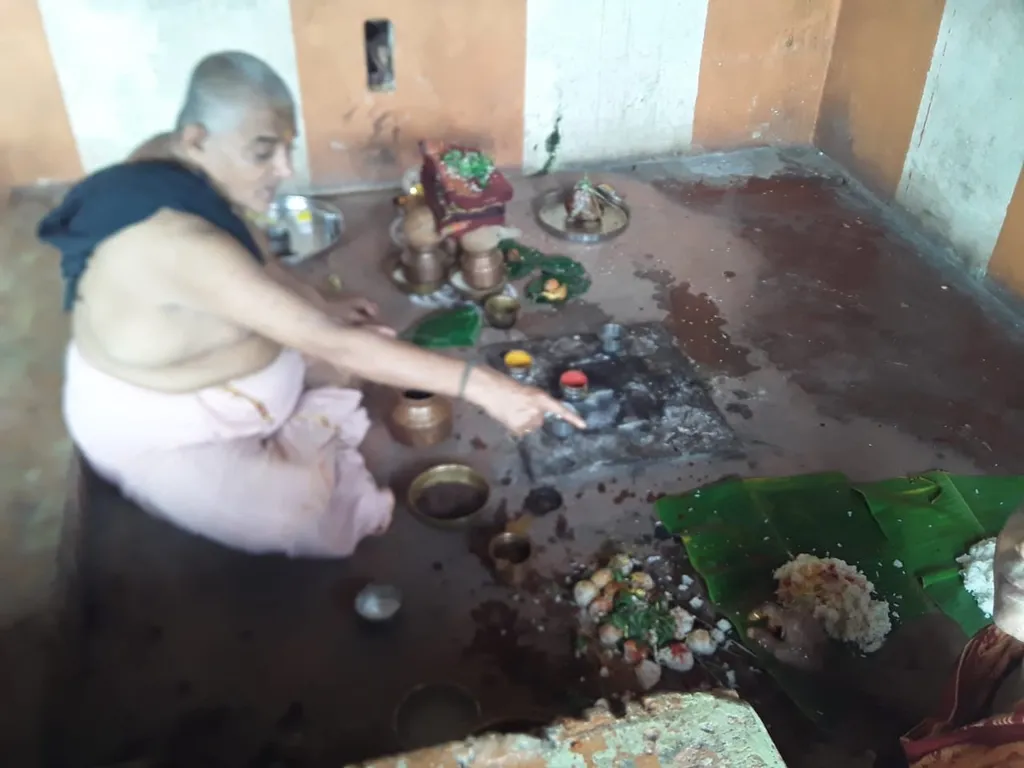
Pind Daan procedure at Koti Teertha, step by step
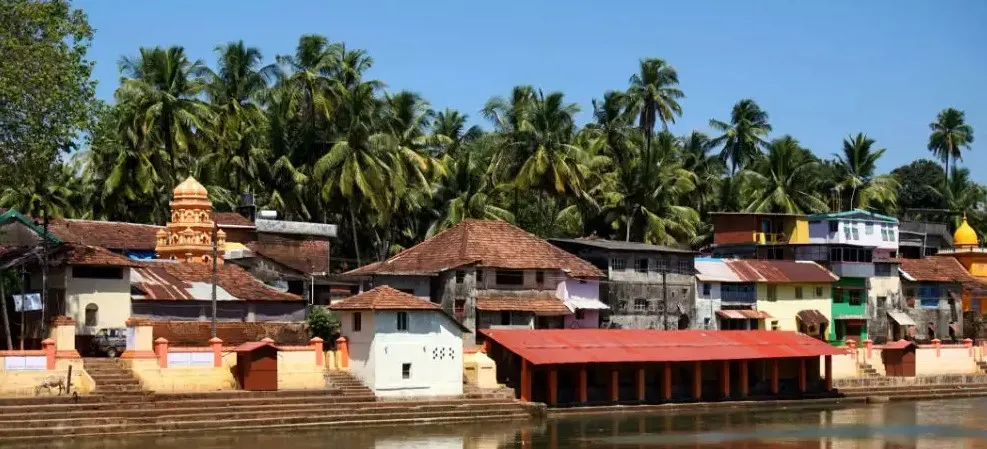
Koti Teertha is the sacred tank beside the Mahabaleshwar temple, said to hold a crore of teerthas within its waters, and it is where the pitru karya of Gokarna begins. A typical pinda daan at Gokarna runs in this order:
- Koti Teertha snana — the family bathes at the tank and changes into ritual dress.
- Achamana and sankalpa — the purohit takes the sankalpa naming the place, the day, the gotra, the performer and the departed.
- Ganapati pooja and punyahavachana — obstacles are removed and the space, the vessels and the family are purified.
- Tila tarpana — water with black sesame is offered to the pitrus, the deva-pitrus and the rishis in turn.
- Pinda nirmana — the pindas are formed from cooked rice, tila, ghee, honey, milk and barley flour.
- Pinda pradana — the pindas are placed on darbha and offered by name, one for each ancestor being remembered.
- Pinda pooja — gandha, pushpa, dhupa, deepa and naivedya are offered to the pindas, and the vayasa bali (crow offering) is set out.
- Dana and brahmana bhojana — the prescribed danas are given and, when the family asks for it, brahmanas are fed.
- Pinda visarjan — the pindas are immersed in Koti Teertha or carried to the seashore.
- Darshan — the family takes darshan of Shree Mahabaleshwar after the rite, never before it.
The whole sequence takes about two to three hours on a single morning. Families who are also performing Moksha Narayana Bali puja or Tripindi Shraddha usually keep two days in Gokarna so the rituals are not rushed together.
Pind Daan at Gokarna or Gaya — how to decide honestly
Gaya is the incumbent, and it would be dishonest to pretend otherwise. The Vishnupad kshetra on the Phalgu, with the Akshaya Vata, is the site the Puranas praise by name for shraddha, and for most families in North and East India "pind daan" simply means Gaya. If your family tradition points there, go there.
Gokarna's claim is a different one. The Skanda Purana's Gokarna Mahatmya describes this shore as the place where Ravana was made to set down the Atmalinga and could not lift it again — the reason the town is called Bhookailasa and revered across the south as Dakshina Kashi, the Kashi of the south. It is a mukti kshetra where the last rites and the pitru karya that follow them have been performed continuously by resident purohits, and where the Aghanashini meets the Arabian Sea. Nothing in the shastra restricts the offering of pindas to one kshetra; a pind daan performed at Gokarna does not cancel a family's Gaya sankalpa, and many families in time do both.
The practical difference matters too. For families in Karnataka, Maharashtra, Goa, Andhra Pradesh, Telangana, Tamil Nadu and Kerala, Gokarna in Uttara Kannada is a single day's travel rather than a three-day journey, and the same visit can carry the pinda daan, the shraddha and any remedial pooja the family needs. You can read more about the kshetra on our introduction to Gokarna.
What does Pind Daan cost at Gokarna, and what is included?
We do not print a rate card, because the dakshina genuinely varies with the rite. What changes the amount is: how many ancestors and generations are named; whether it is pinda daan alone or pinda daan with tila tarpana, a tila homam or a full shraddha; how many ritwiks officiate; the quality and quantity of samagri; whether brahmana bhojana and the prescribed danas are arranged; and whether the family needs help with a room for the night.
What is arranged for you is the pinda samagri, the darbha, tila and the rest of the materials, the Koti Teertha arrangements, and the priests. What the family gives directly — dana, gau dana, brahmana santarpana — is separate and is decided by the family. For the exact figure for your sankalpa, call +91 83109 37047 or +91 88613 21496 and describe the rite you want; a comparison across our rituals is on the Gokarna pooja cost page.
What should the family bring, and what happens on the day?
Bring a dhoti and angavastra for the person performing the pinda pradana, a saree or simple traditional dress for the women of the family, and a change of clothes for after the snana. Bring the ancestor's name, the gotra and the tithi or date of passing if you have it. Keep the day satvik — no onion, no garlic, no alcohol — and the person offering fasts until the visarjan is complete.
Reach Gokarna the previous evening if you can. Rites begin early, and temple darshan is taken afterwards, so plan the day around the pooja rather than the other way round. Our priests will tell you where to assemble, what time the snana should be finished by, and how long you should keep free.
Can Pind Daan be performed on my behalf if I cannot travel?
Yes. Where illness, age, work or distance makes travel impossible, the sankalpa is taken in your name and gotra and the pinda daan is performed at Koti Teertha by our priests, with photographs or a live video call so you can join at the moment of the offering. Presence is always better where it is possible; where it is not, this is the accepted way, and the details are on our online pooja booking page.
How to book Pind Daan in Gokarna
Call or send a message on WhatsApp with four things: the name and relationship of the departed, the gotra, the tithi or date of passing if known, and the dates you can be in Gokarna. Vishweshwar D. Bhat Gurulingaji, Kshetra Gokarna Purohit, will confirm a suitable day, tell you exactly what the rite involves and what it will cost, and hold the slot for you. During Pitru Paksha, book several weeks ahead — the fortnight fills quickly. You can also send an enquiry from the contact page or read about the purohit and his lineage.
Frequently asked questions
What is the cost of Pind Daan in Gokarna?
Can Pind Daan be performed outside Pitru Paksha?
Can a daughter perform Pind Daan for her parents?
How long does Pind Daan take at Gokarna?
Is Gaya better than Gokarna for Pind Daan?
Where exactly in Gokarna is Pind Daan performed?
What is the difference between Pind Daan and Tarpan?
Can Pind Daan be done if I do not know the exact date of death?
Can you perform Pinda Daan on my behalf if I cannot come to Gokarna?
Related poojas at Gokarna
Rituals families most often perform alongside pinda daan.
Perform Pind Daan at Gokarna
Speak to Vishweshwar D. Bhat Gurulingaji for auspicious dates, the vidhi procedure and complete arrangements for your visit.