
Naga Bali Pooja — written by devotees as Nagbali Puja, Nagabali Pooja or simply Nag Bali — is the serpent-propitiation rite performed in the compound of Shree Mahabaleshwar Temple at Gokarna, in Uttara Kannada district of Karnataka. Families travel here for one reason above all others: to seek naga dosha nivarana, the relief the shastras associate with honouring the naga devatas when a serpent has been harmed or killed in the family line, knowingly or unknowingly, and no atonement was made at the time.
The ritual is conducted by Vishweshwar D. Bhat Gurulingaji, Kshetra Gokarna Purohit, together with our priests, following the Vedic vidhi as it is observed at this kshetra. Gokarna's standing as a place of ancestral and remedial rites is why devotees come here rather than to a temple nearer home — the Atmalinga and the shrine itself are described on our Gokarna Mahabaleshwar Temple page. What follows sets out the rite, the traditional signs of sarpa dosha, the vidhi and how to book.
Also known as: Nagbali Puja, Nagabali Pooja, Nag Bali, Naga Dosha Nivarana.
What is Naga Bali Puja?
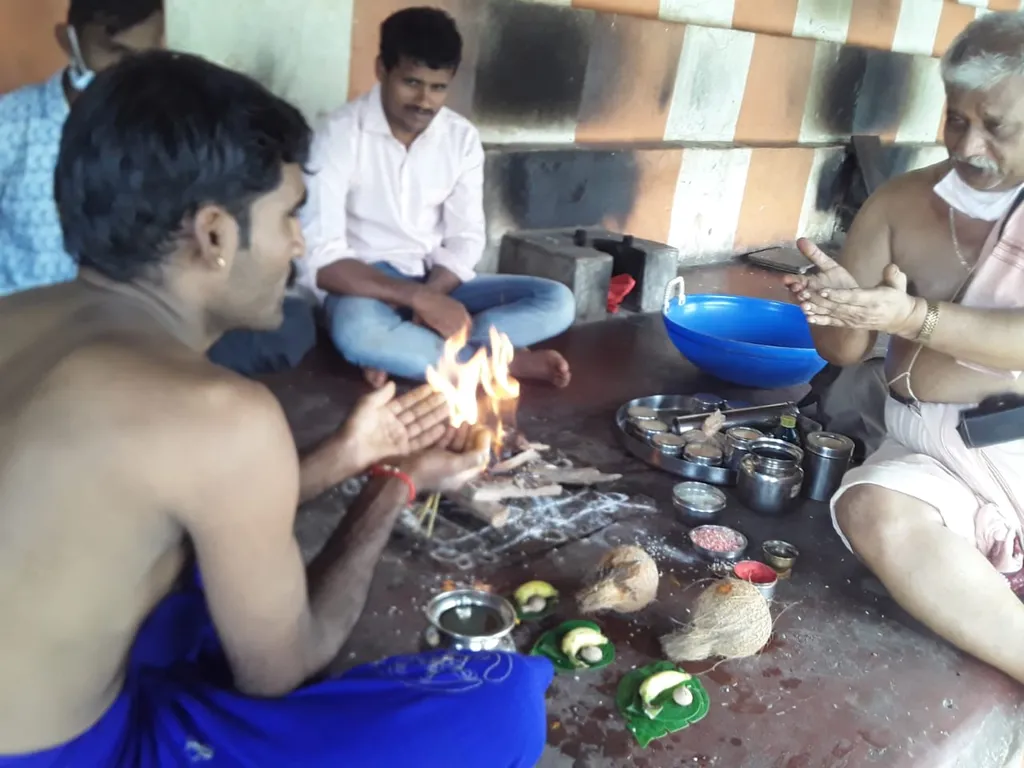
Naga Bali is a rite of atonement and propitiation addressed to the naga devatas, the serpent deities of the Hindu tradition. A naga murti made in silver or in clay is installed and worshipped: abhisheka is performed over it, the sankalpa naming your gotra, nakshatra and family is taken, mantras and naivedya are offered, the bali is made on the serpent's behalf, and the murti is finally given visarjana. The word bali here does not mean harm. It means an offering made for the being that was wronged, so that the naga receives the same honours a family would perform for one of its own.
The circumstance the tradition names most plainly is sarpa hatya — the killing or injuring of a snake, or the destruction of a naga bana, an anthill or an ancestral serpent stone, whether by an ancestor generations ago or by someone in the present household. Where no prayaschitta was performed, the resulting affliction is called naga dosha or sarpa dosha, and Nagabali Pooja is the parihara prescribed for it. Devotees also come having been told by an astrologer that their horoscope carries sarpa dosha, without any remembered incident at all; both routes bring families to the same rite.
On the day itself the temple compound carries the sound of Vedic chanting and the smell of incense and camphor, and the family sits through the vidhi with the priest explaining each stage as it is performed. The questions devotees ask most often before they travel are collected on our Nagabali Puja FAQ for Gokarna.
Call +91 83109 37047 (Vishu Guruling) for all Gokarna pooja details
WhatsApp UsWhat are the traditional signs of naga dosha or sarpa dosha?
Tradition associates naga dosha with a recognisable set of difficulties: childlessness or repeated miscarriage, delay in marriage, persistent skin ailments, recurring dreams in which serpents appear, and a pattern of obstruction in a family's affairs that has no ordinary explanation. These are read as indications within the tradition rather than as a diagnosis, and devotees perform Naga Bali seeking the grace of the naga devatas in these matters — the shastras long associate the nagas with fertility and progeny, which is why families whose concern is children are so often directed to this puja.
In jyotisha, the graha connected with the nagas are Rahu and Ketu. When they afflict the fifth house, the house of progeny, or sit with its karaka, astrologers describe the chart as carrying sarpa dosha or naga dosha. Where every planet in the horoscope falls between Rahu and Ketu, the reading given is a different one — Kaal Sarp Dosh, for which a separate Rahu-Ketu nivaran pooja is performed at Gokarna. If a jyotishi has already given you a reading, tell us what was said when you call, so that the right rite is chosen rather than the one that merely sounds closest.
| Ritual | Naga Bali Pooja (Nagbali / Nagabali / Nag Bali Puja) |
|---|---|
| Duration | 1 day (approx. 3–4 hours) |
| Best days & tithis | Panchami, Shravana month, Amavasya |
| Who performs it | A family member, with family present |
| What we arrange | Silver or clay naga idol, abhisheka samagri, priests |
| Where | Shree Mahabaleshwar Temple compound, Gokarna, Uttara Kannada, Karnataka |
| Dakshina | Not a fixed package rate — quoted on the call once the scale of the rite is known |
| Booking | +91 83109 37047 or +91 88613 21496 |
Who should perform Naga Bali Pooja at Gokarna?
Naga Bali is performed by a member of the lineage in which the sarpa dosha is believed to have arisen, with the family present. Where the family's concern is progeny, husband and wife commonly sit for the sankalpa together. Where an astrologer has read the dosha in one person's horoscope, that person usually takes the sankalpa, whether married or unmarried. Elders, children and other relatives attend and receive the teertha and prasadam at the close.
Practice genuinely differs between families, sampradayas and regions, and no single rule fits every household. Rather than have you travel on an assumption, describe your situation on the phone — who is affected, what you were told, whether a death or an incident lies behind it — and Gurulingaji will tell you who should sit for the rite. The Gokarna pooja enquiry form takes the same details in writing.
Naga Bali procedure step by step (Nagbali puja vidhi)
The vidhi is followed in the sequence set out in the tradition, and the whole of it is completed on a single morning.
- Snana and purification. The family bathes before the rite begins; many take the traditional dip at Koti Teertha, the sacred tank at Gokarna, which is where the pitru and remedial rites of this kshetra customarily begin.
- Sankalpa. The person performing the puja states the resolve aloud with the priest, naming the gotra, the nakshatra, the family and the purpose for which the naga dosha nivarana is being undertaken.
- Installing the naga murti. A serpent form in silver or in clay is placed and invoked as the seat of the naga devata for the duration of the rite.
- Abhisheka. The murti receives the sacred bath — milk, turmeric, sandal and the other prescribed dravyas — with the naga mantras chanted throughout.
- Pooja and naivedya. Flowers, darbha, incense and the offerings laid down for the nagas are made, and the prayers of atonement for sarpa hatya are recited.
- Bali. The bali offering is made on behalf of the serpent, which is the act that gives the ritual its name.
- Visarjana. The naga murti is respectfully immersed, releasing the invoked presence at the close of the rite.
- Conclusion. The customary daana is given, and the family receives teertha and prasadam before leaving the compound.
Our priests explain each stage as it happens, in Kannada, Hindi or English, so the family understands what is being offered and why. Where Nagbali forms part of a larger set of rites, the order of the days is planned in advance so nothing is done out of sequence.
How many days does Nagabali Puja take at Gokarna?
Naga Bali on its own is a one-day rite, and the ritual portion runs to roughly three to four hours, beginning in the morning after the purificatory bath. The exact starting time is fixed when your date is confirmed, because it depends on the tithi, on the temple's own observances that morning and on how many rites your family is performing.
Families travelling a long distance usually prefer to arrive the previous evening so the morning is unhurried. If you are combining Nagabali with Moksha Narayana Bali at Gokarna or with Tripindi Shraddha, plan for a longer stay — we will tell you how many days to allow once we know which rituals you want performed.
Which day or tithi is best for Nag Bali?
Panchami tithi is the traditional choice for anything addressed to the nagas, and Naga Panchami in the month of Shravana is the most sought-after date of the year for this puja. The Mondays of Shravana are also observed for it, and Amavasya is taken by many families, particularly when Naga Bali is being performed alongside rites for the ancestors.
Those dates are not a restriction. If work, travel or a family occasion means you can only come at another time, the panchanga is consulted and a suitable muhurta is fixed for the day you are able to reach Gokarna. Because Shravana and the Pitru Paksha fortnight are the busiest periods here, families who want a date in those windows should call well ahead rather than arrive and hope for a slot.
Naga Bali, Naga Pratishta or Narayan Nagbali — which one do I need?
These names are used loosely in conversation and it is easy to book the wrong rite. In short:
- Naga Bali is the one-day atonement and propitiation described on this page, for sarpa dosha arising from harm to a serpent.
- Naga Pratishte (Naga Pratishta) at Gokarna is the consecration and installation of a naga stone for continuing worship, performed over two days, and is what a family needs when an ancestral naga bana or naga kallu has been neglected or must be re-established.
- Narayan Nagbali Pooja at Gokarna is the combined observance in which Narayana Bali for a departed soul and Naga Bali are performed together over two to three days. Devotees from Maharashtra and North India most often know the rite by this compound name.
- Kaal Sarp Dosh Nivaran is the jyotisha remedy for the Rahu-Ketu yoga in a horoscope, and is a different rite altogether from Nagbali even though both concern the serpent graha.
If you are unsure which of them applies, that is precisely the conversation to have on the phone before booking anything. A short description of what you have been told, and of what the family remembers, is usually enough for Gurulingaji to say which puja is called for.
Why perform naga dosha nivarana at Gokarna?
Gokarna has been a place of atonement and release for a very long time, and it is spoken of as Dakshina Kashi, the Kashi of the south, for exactly that reason. The Atmalinga at Shree Mahabaleshwar Temple is the heart of the kshetra, and the teerthas around it — Koti Teertha, the shore where the Aghanashini meets the sea — give the prayaschitta rites their setting. Devotees who wish to read more about the town and its sacred geography can begin at our page on Gokarna, the temple town and its teerthas.
According to the puranic account preserved here, Lord Vishnu in his Mohini avatar drew the asuras away from the elixir of immortality, and in the celestial events that followed a few drops of amrita are believed to have fallen at certain sacred places; Gokarna is held to be one of them. What families find here is a working kshetra where these rites are ordinary daily practice, performed by priests based in the temple compound.
What does Naga Bali Pooja at Gokarna cost?
We do not publish a price list for this puja, because a fixed figure would misrepresent what is actually being arranged. The dakshina for Nagbali depends on the scale at which the rite is performed, on whether the naga murti is made in silver or in clay, on the samagri required, on the number of priests officiating, and on whether Naga Bali is being performed alone or as part of a longer sequence of rituals over several days.
What we arrange for a Naga Bali booking is the naga murti, the abhisheka samagri and the priests who conduct the vidhi. Call +91 83109 37047 or +91 88613 21496, describe what you need, and you will be told the dakshina for your requirement before you commit to a date — there is no obligation in asking. Our overview of Gokarna pooja cost and what a booking includes explains how the quote is arrived at for each of the rituals we perform.
What to bring, and what to expect on the day of the puja
Keep ready the names, gotra and nakshatra of the family members who will sit for the sankalpa, and — where the rite is connected with a death — the name and details of the departed. Traditional dress is customary in the temple compound: a dhoti or veshti for men, a saree or salwar for women. Bring a change of clothes if you intend to take the snana at Koti Teertha before the puja.
As with most rites of this kind, the person taking the sankalpa customarily eats only after the ritual is complete, and families generally keep to satvik food, without onion or garlic, on the day itself. If there is a health reason that makes fasting difficult, say so when you book. Nothing needs to be purchased in advance — the samagri is arranged here. If your family already owns a naga murti or a family naga stone you would like used, bring it and mention it when booking so the vidhi is planned around it.
How to book Naga Bali Pooja at Gokarna
Booking is done by phone or WhatsApp, and it is deliberately a conversation rather than a form, because the right rite and the right date depend on your circumstances.
- Call +91 83109 37047 or +91 88613 21496, or send the same details through the Gokarna puja enquiry form.
- Tell us what has been advised to you, the names and gotra of the family, and how many people will attend.
- We suggest dates from the panchanga — Panchami, a Shravana Monday, Amavasya or another suitable muhurta near the time you can travel.
- The dakshina is quoted for your requirement and the date is confirmed.
- Reach Gokarna the previous evening where you can, and come to the temple compound in the morning for the snana and the sankalpa.
If you are unable to travel to Gokarna at all, ask us about having the rite performed on your behalf when you call — our page on online and remote pooja booking at Gokarna explains how that is handled for devotees living far away or abroad.
Related poojas at Gokarna
Rituals devotees most often perform alongside, or instead of, Naga Bali.
-
Narayan Nagbali Pooja at Gokarna
The combined Narayana Bali and Naga Bali rite performed together for release from ancestral and serpent doshas.
-
Naga Pratishte at Gokarna
Vedic ceremony invoking and honouring the Naga Devatas for protection and prosperity.
-
Kaal Sarp Dosh Nivaran Pooja at Gokarna
Rahu-Ketu remedial rites performed at Gokarna to relieve the effects of Kaal Sarp Dosha.
Frequently asked questions
What is Naga Bali Pooja?
How many days does Nagabali Puja take at Gokarna?
What is the cost of Naga Bali Pooja at Gokarna?
What are the traditional signs of naga dosha?
Is Naga Bali the same as Narayan Nagbali?
Should both husband and wife attend the Naga Bali pooja?
Which is the best day or tithi for Nag Bali?
Can an unmarried person perform Nagabali Puja?
Do I need to bring a silver naga idol?
More questions about this ritual — timings, eligibility, samagri and beliefs?
Read the full Nagabali Puja FAQ for GokarnaPerform Naga Bali at Gokarna
Speak to Vishweshwar D. Bhat Gurulingaji for auspicious dates, the vidhi procedure and complete arrangements for your visit.