
Gokarna Beach — Om, Kudle, Half Moon and Paradise
The town shore where pilgrims take the sea bath before a pooja, and the four beaches along the headlands south of it.
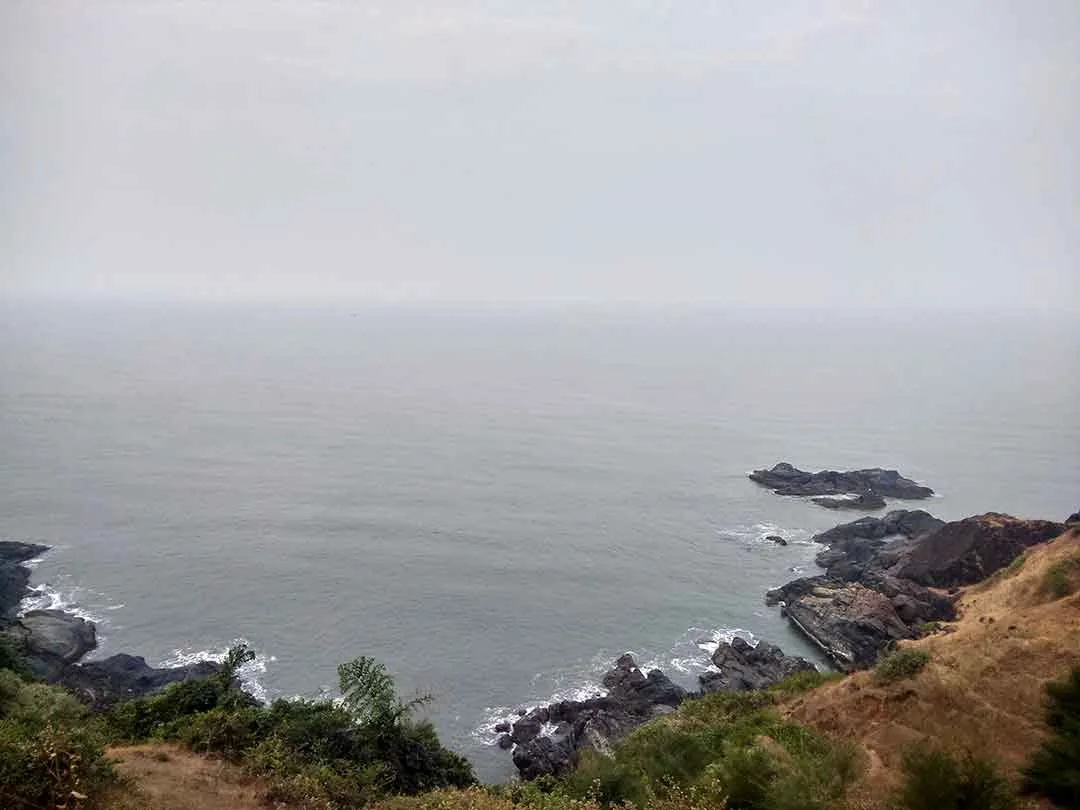
Gokarna has one beach that belongs to the temple town and four that belong to the headlands south of it, and the difference matters if you are coming here for a ritual. Gokarna Main Beach — the wide town shore a few minutes' walk from the Mahabaleshwar temple — is where pilgrim families take the sea bath before a pooja and where the shore rites are performed. Kudle, Om, Half Moon and Paradise, strung along the coast to the south, are the beaches most travellers come for. This page covers both: which beach is which, how to reach each one, and what a family arriving for a puja actually needs to know about the water.
Which beaches are there in Gokarna?
Five, running north to south along a stretch of the Uttara Kannada coast, separated by rocky headlands rather than by road.
- Gokarna Main Beach (the town beach) — long, open and used by fishing boats and by pilgrims. It is the nearest sand to the temple and the one with ritual significance.
- Kudle Beach — the first cove south, a broad crescent reached over the headland from town. Cafés and simple guesthouses sit behind the sand.
- Om Beach — named for the two linked curves that trace the shape of the syllable ॐ. It has road access as well as the footpath, which makes it the busiest of the southern beaches.
- Half Moon Beach — a small crescent beyond Om, reached on foot over the rocks or by boat.
- Paradise Beach — the last and most remote, with no road to it at all; you walk in from Half Moon or arrive by boat.
The town's setting explains why the shore is part of the pilgrimage and not merely scenery. Gokarna sits between two coastal rivers, the Gangavali to the north and the Aghanashini to the south, and both meet the Arabian Sea nearby. A place where river water joins the sea has always been held fitting for the rites of the departed, which is one reason the kshetra draws families for ancestral rituals as well as for darshana. Welcome to Gokarna covers how to reach the town itself.
Which beach in Gokarna is used for ritual bathing?
The main town beach. Samudra snana — the bath in the sea taken before a ritual — is the first act of most mornings here, and its purpose is simple: the person performing the rite enters the water, bathes, and changes into fresh clothes before the sankalpa is taken. Families come down to the sand at first light, and by the time the sun is properly up they are back in the town for the puja.
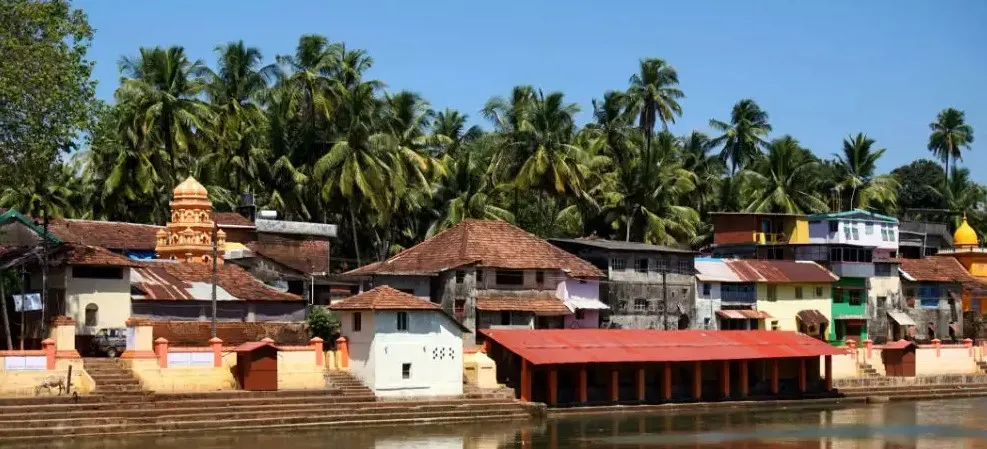
Not every ritual requires the sea. Many families bathe instead at Koti Teertha, the sacred tank beside the temple, which is calmer, shallower and easier for elderly relatives. Which of the two you use depends on the ritual and on your family's practice, and the priest settles it with you beforehand rather than leaving you to guess. You will find the full range of rites on the pooja services page.
Where are tarpana and asthi visarjan performed on the shore?
Tarpana — the offering of water and black sesame to the departed — is performed at the water's edge, and so is the release of the ashes. Asthi visarjan at Gokarna is done either in the sea off the main shore or at Koti Teertha, and the choice on any given day turns on the family's tradition, the tithi and the tide. Families who continue with pind daan and pinda pradana, or with preta dosha rites, normally do so at the teertha immediately afterwards. During Pitru Paksha the shore is busiest in the early morning, when several families may be performing tarpan at once.
How far is Gokarna beach from the Mahabaleshwar Temple?
The main beach is about a five to ten minute walk: leave the temple by the western lanes of the old town and the sand opens in front of you. Everything else is further out. Kudle is roughly twenty minutes on foot over the headland, or a short auto ride to the top of the path. Om Beach lies a few kilometres south and can be reached by road, which is why it is the one most day visitors see. Half Moon and Paradise have no road; you continue on foot along the cliff trail, or take one of the boats that run from Om Beach in fair weather.
The whole chain can be walked in a day if you start early. It is an unshaded path over rock and scrub, so carry water and wear shoes with grip.
Is it safe to swim at Gokarna beach?
The sea here deserves caution rather than fear. The sand shelves quickly in places, currents can pull sideways, and you should not assume there is lifeguard cover. Stay within waist depth, keep children beside you, avoid the water after dark, and stay out altogether when the monsoon swell is running. None of this restricts the ritual bath, which is a shallow dip and needs no swimming at all. If an elderly member of the family is performing the rite, say so when you call and the bathing will be arranged at the tank instead.
What is the best time to visit Gokarna's beaches?
October to February is the settled season — calm sea, dry air, comfortable mornings — and it is when most pilgrims and travellers come. March to May is hot, but the early mornings and evenings are pleasant enough. From June to September the coast is at its greenest and emptiest, but the sea is rough, the cliff path is slippery and the boats between the southern beaches generally stop. Whatever the month, the beach belongs to the early morning: it is quiet, the sand is cool, and shore rituals are performed then.
What should a pilgrim family take to the beach?
Very little, but take it deliberately: a towel and a full change of clothes for whoever is bathing, drinking water, footwear you can leave at the edge of the sand, and nothing valuable. If you are unsure where to stay within walking distance of both the temple and the shore, ask when you book the pooja and we will point you to something suitable.
Coming to Gokarna for a pooja?
Many families who reach this page while planning a trip are here for a ritual as much as for the coast. If that is you, the shore fits into a morning that is already arranged: bathe at first light, meet the priest, and the rite follows. Call +91 83109 37047 or +91 88613 21496 with the dates you can travel and what you wish performed. If you cannot come in person, online and remote pooja booking explains how the rites are performed in your name and gotra — or send an enquiry, or read about Gokarna pooja and the other temple poojas.
Gokarna Temple
The Mahabaleshwar temple and the Atmalinga at the heart of the town.
Koti Teertha
The sacred tank used for ritual bathing, tarpana and immersion rites.
Welcome to Gokarna
How to reach the town, and what to expect when you arrive.
Frequently asked questions
Which beach in Gokarna is used for ritual bathing?
How far is Gokarna beach from the Mahabaleshwar Temple?
Where is asthi visarjan performed in Gokarna?
Is it safe to bathe in the sea at Gokarna?
What is the best time of day for the ritual sea bath?
Are there changing facilities at Gokarna beach?
Can you walk from Gokarna beach to Om Beach and Paradise Beach?
When is the best time of year to visit Gokarna's beaches?
Call +91 83109 37047 (Vishu Guruling) for all Gokarna pooja details
WhatsApp Us