
Pitru Dosha is the affliction Hindu tradition traces to ancestors whose after-death rites were left incomplete, forgotten or performed without the prescribed vidhi. North Indian families write and search for the same condition as pitra dosh; in Karnataka, Andhra and Tamil Nadu it is spoken of as pithru dosham, and the remedy is asked for as parihara rather than nivaran. Pitru Shaapa — literally the curse of the pitrus — is the sharper form of the same problem: a lineage that feels its ancestors are not merely unremembered but displeased. At Gokarna both are treated by one family of rites, and this page describes the Pitru Dosha Nivarana pooja as it is performed here.
Most families reach this page after an astrologer has read pitru dosha in the kundali, or after a run of difficulties that an elder has put down to the ancestors. What follows is deliberately practical: what the dosha is said to be, the signs tradition associates with it, how it is identified in a horoscope, which puja is performed at Gokarna, who has to be present, how long the day takes and how the arrangements are made. Gokarna is one of the oldest pitru karya kshetras on the western coast — the town's standing rests on the Atmalinga enshrined at the Shree Mahabaleshwar Temple in Gokarna, and on the teerthas around it where tarpana and pinda offerings have been made for centuries.
Also known as: Pitru Dosha Nivarana · Pitra Dosh Nivaran · Pitru Dosha Parihara · Pitru Shaapa Vimochana, pitru dosh shanti puja
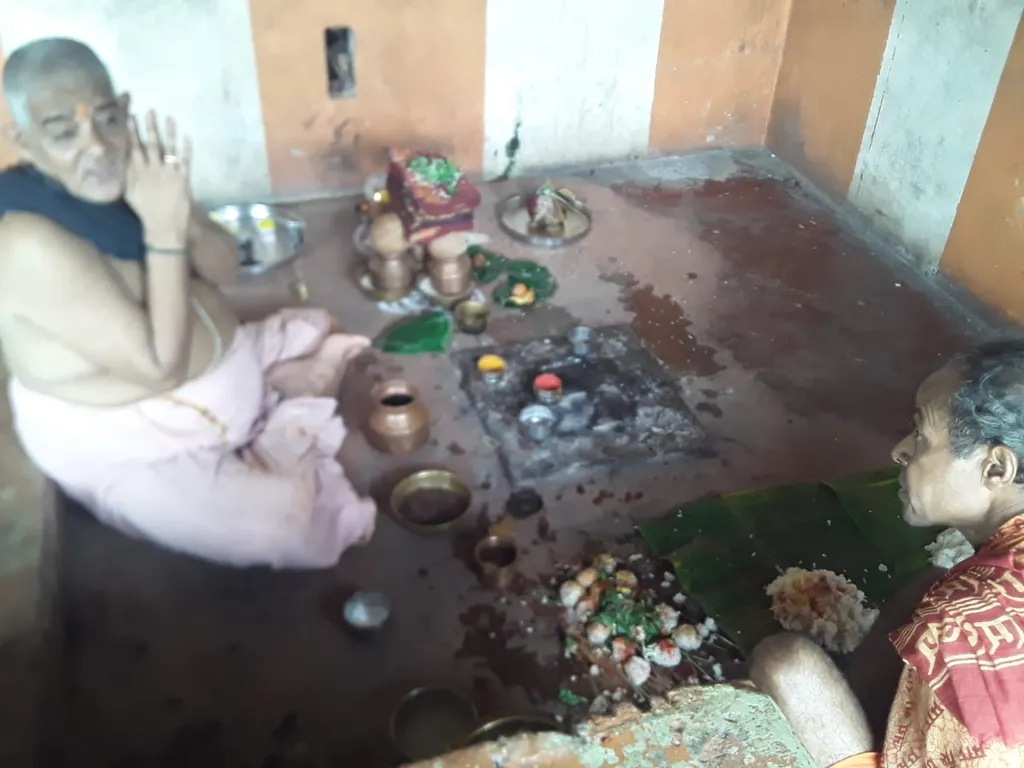
Pitru Dosha Nivarana pooja at a glance
- Ritual
- Pitru Dosha Nivarana / Pitru Shaapa Vimochana
- Duration
- 1 day (approx. 3–4 hours)
- Best days & tithis
- Amavasya, Pitru Paksha
- Who should attend
- A family member of the affected lineage
- What we arrange
- Samagri, priests, tarpana and homa arrangements
- Where
- Shree Mahabaleshwar Temple kshetra and the teerthas of Gokarna, Uttara Kannada, Karnataka
- Dakshina
- Varies with the rites included — call +91 83109 37047 for an exact figure
What is Pitru Dosha (Pitra Dosh)?
In the shastras a family's obligation to its elders does not end at the cremation ground. The departed are held to pass through a period in which the offerings of their descendants — pinda, tarpana and the annual shraddha — sustain them and carry them onward. Every household is described as owing three debts, and one of them, pitru rina, is the debt to the ancestors. When the prescribed karmas are omitted across a generation or two, tradition calls the resulting condition pitru dosha: an unpaid ancestral debt that the living branch of the family continues to carry.
The dosha is not understood as punishment. It is described as an interruption in a relationship — the pitrus have not been given their share, and the flow of ancestral blessing that a family is held to depend on is blocked. The causes most often named by traditional priests are ordinary and forgivable: the shraddha and tarpana were never learned by the next generation; a death happened far from home, abroad or in an accident, and the full samskara could not be done; the asthi were never immersed in a teertha; a line ended without male issue and the rites lapsed; ancestral property or a temple endowment was misused; or an elder died with a grievance that was never addressed. Recognising which of these applies to your family is the first step of any honest pitra dosh nivaran.
What is Pitru Shaapa, and how is it different from Pitru Dosha?
Dosha means a blemish or affliction; shaapa means a curse. Pitru dosha is the broader condition — a lineage whose ancestral duties are in arrears. Pitru Shaapa is the more acute form of it: the family believes the ancestors are actively displeased, usually because of a specific wrong — property taken from a brother, a widow or a dependent neglected, a promise made at a deathbed and not kept, cremation rites hurried or denied. The prayer offered in such cases is Pitru Shaapa Vimochana, release from the ancestral curse, and it takes the form of a formal kshama prarthana — asking forgiveness by name — inserted into the main vidhi.
In practice the two are not treated as separate bookings. When a family comes to Gokarna for pitru dosha parihara, the purohit first establishes what is missing in the family's pitru karya, and the shaapa vimochana prarthana is added to the sequence where the situation calls for it. This is why one url on this site covers both terms: they describe the same relationship, at different degrees.
Call +91 83109 37047 (Vishu Guruling) for all Gokarna pooja details
WhatsApp UsSigns and symptoms devotees associate with Pitru Dosha
Families almost never arrive with a horoscope first. They arrive with a pattern of difficulty that an elder or an astrologer has attributed to the ancestors. The signs listed below are the ones most commonly described to us and most commonly named in the traditional literature. Please read them as prompts to check whether your family's ancestral rites are complete — not as a diagnosis, and not as proof that a curse exists.
- Delayed marriage — alliances that progress and then break off repeatedly, in one generation or across siblings.
- Childlessness or repeated loss of pregnancy — traditionally called santana baadha, and the single reason most often given for seeking pitru dosh nivaran puja.
- Recurring illness in the family — complaints that are treated properly and keep returning, or a household in which someone is always unwell.
- Financial loss and money that does not stay — earnings that never accumulate, business that stalls at the last stage, debts that keep reappearing.
- Property and land disputes — ancestral property that cannot be divided, sold or registered; litigation that runs for years between relatives.
- Persistent discord within the family — estrangement between brothers, quarrels that always circle back to the elders or to inherited land.
- Repeated dreams of departed elders — especially dreams in which they appear hungry, thirsty, unclothed or asking for something. Tradition reads these as a reminder that offerings are due.
- Obstacles at the final step — work, jobs, visas or agreements that seem settled and then fall through without an explanation.
- No peace at home — a household that is outwardly comfortable but in which nobody feels settled.
A responsible purohit will not tell you that any of this proves pitru dosha. He will ask a plainer question first: have the shraddha, tarpana and pinda offerings of the last three generations actually been performed, and were the last rites of everyone in that line completed? If the answer is no, that gap is what the nivarana rite addresses. Medical, legal and financial matters deserve their own proper attention alongside — a puja is offered for the peace of the ancestors, not in place of a doctor or a lawyer.
How is Pitru Dosha identified in a horoscope?
Jyotisha reads the ancestors through a small number of significators. The Sun stands for the father and the paternal line; the Moon for the mother and the maternal line; the ninth house of the janma kundali for the father, for dharma and for ancestry as a whole; and Rahu and Ketu, the two shadow grahas, for karma left unfinished. In general terms, an astrologer looking for pitru dosha examines whether the Sun is conjoined with or afflicted by Rahu or Ketu, whether the ninth house or its lord is afflicted, and how Ketu — the graha classical texts associate most closely with the pitrus — is placed.
A related but distinct reading arises when every graha in the chart falls on one side of the Rahu–Ketu axis. That configuration is read as kaal sarp, and although families often confuse it with pitru dosha, the prescribed remedy is a different one; the Kaal Sarp Dosh Nivaran Pooja at Gokarna is performed for it. We do not publish horoscope readings on this site and we will not tell you over the phone that your chart is afflicted. If a jyotishi you trust has already identified pitru dosha, pitra dosh or a related affliction, say what was read when you call, and the vidhi will be assembled to match the prescription.
Pitru Dosha, Preta Dosha or Naga Dosha — which applies to your family?
Three conditions are constantly confused with one another, and booking the wrong rite helps nobody. Pitru dosha or pitru shaapa concerns the ancestral line as a whole, over three generations, and is answered with shraddha, tarpana, pinda pradana and homa. Preta Dosha concerns one specific departed person whose after-death rites were left unfinished — commonly after an untimely, unnatural or unattended death — and the remedy is directed at that individual soul rather than at the lineage. Naga dosha or sarpa dosha, including the kaal sarp pattern described above, arises from a wrong done to the serpent deities and is answered by an entirely different set of rites.
A family can carry more than one of these at the same time, which is why the first conversation matters more than the booking. Describe the deaths in the family, what rites were done and what was skipped, and the purohit will tell you which vidhi is prescribed — including, honestly, when nothing more than the regular annual shraddh is needed.
Which poojas are performed for Pitru Dosha Nivarana at Gokarna?
There is no single ritual named "pitru dosha". The nivarana is a sequence, assembled for the specific gap in a family's ancestral duty. At Gokarna the components most often prescribed are these:
- Sankalpa and kshetra shuddhi — the formal resolve, taken in your name and gotra, and the purification rites performed at the kshetra before the main puja begins.
- Tarpana (tarpanam) — water mixed with til and offered through darbha grass to three generations of the paternal and maternal lines.
- Pinda pradana — rice pindas offered for the named ancestors, the same principle as pind daan, and immersed in the teertha at the close.
- Thila Homam (Tila Havana) — the sesame fire offering, performed for the purification of the ancestral line and among the most frequently prescribed parts of a pitru dosh shanti.
- Tripindi Shraddha — where the shraddha of three generations was never performed at all, the three-pinda rite is done in place of the missing years.
- Pitru Shaapa Vimochana prarthana — the kshama prarthana asking forgiveness, where the family believes a specific grievance is involved.
- Brahmana bhojana and daana — feeding and gifting at the close, which the shastras treat as the part through which the offering actually reaches the pitrus.
Which of these apply to you is settled in conversation before a date is fixed — not improvised on the morning of the pooja.
Pitru Dosha Nivarana pooja procedure step by step
The vidhi below is the ordinary shape of the day. Names, order and the mantras used vary with the family's sampradaya and with what the purohit finds missing in the ancestral rites.
- Snana and achamana at the teertha, and traditional dress worn by everyone taking part.
- Sankalpa — the yajamana states his name, gotra, the place, the tithi and the purpose of the rite: pitru dosha nivarana and, where applicable, shaapa vimochana.
- Kshetra vidhi and punyahavachana — purification of the place, the vessels and the participants.
- Avahana of the pitrus — the ancestors are invoked by name and gotra as far back as the family can remember them, with the darbha and til placed as the shastra prescribes.
- Tarpana — the water offering, made to the paternal line, the maternal line and, where the vidhi includes it, to all departed souls of the lineage.
- Pinda pradana — the rice pindas are shaped, offered and placed for the named ancestors.
- Til homa — the fire offering with sesame, ghee and samidha, with the pitru mantras recited by the officiating priests.
- Kshama prarthana — the formal request for forgiveness, in which the family acknowledges what was left undone.
- Visarjana — the pindas are given to the teertha, and the pitrus are respectfully taken leave of.
- Brahmana bhojana, vastra and daana — feeding, and the giving of cloth and daana, which conclude the rite.
The yajamana sits through the whole vidhi with the purohit. The mantras are recited by the officiating priests; you repeat the sankalpa and perform the offerings with your own hands, which is the part that matters. Everything is explained in Kannada, Hindi or English as the family prefers.
How many days does Pitru Dosh Nivaran Puja take, and who must attend?
The rite is normally completed in 1 day (approx. 3–4 hours), from the morning sankalpa to the concluding daana. Families are usually advised to reach Gokarna the previous evening, so that the puja can begin early without haste and there is time for the preliminaries at the teertha. Where Tripindi Shraddha or a combined ancestral rite is prescribed alongside the nivarana, the visit runs longer, and you will be told that before you travel rather than after you arrive.
The yajamana should be a family member of the affected lineage. By custom the eldest son takes that place. Where there is no son, the shastras allow a grandson, a brother, a nephew, a daughter or a daughter's son, or the nearest sagotra relative to perform the rite — a family without a male heir is never left without a remedy, and this is one of the most common questions asked on the phone. Where the yajamana is married, husband and wife normally sit together for the homa. Other family members may be present throughout; there is no requirement that the whole family travel, though many prefer to come together.
When is the best day for pitru dosh shanti?
The traditional windows are Amavasya, Pitru Paksha. Amavasya, the new moon, is the standing day of the ancestors in every month, and the Mahalaya Pitru Paksha fortnight is the most auspicious period of the year for all pitru karya. Within it, Sarva Pitru Amavasya — the concluding Mahalaya Amavasya — is the day families ask for most often, and Somavati Amavasya, when the new moon falls on a Monday, is also sought after. The tithi of an elder's death and the days around Makara Sankranti are used as well.
The rite is not restricted to these days. If your family can only travel at another time, a suitable tithi is fixed for you after checking the panchanga. If you are planning around the Mahalaya fortnight specifically, see the Pitru Paksha shraddha, tarpan and pind daan services — those sixteen days fill up well in advance, and dates should be confirmed early.
What does Pitru Dosha Nivarana pooja cost at Gokarna?
No rate card is published on this site, and you should be wary of any that is quoted to you before your situation is known. The dakshina for pitru dosha parihara depends on which rites the vidhi actually includes — tarpana alone is a smaller undertaking than a full Tripindi Shraddha with homa — on how many ancestors are to be named, on how many priests officiate, on the quantity of samagri the homa needs, and on whether brahmana bhojana and daana are arranged through us.
What is arranged for you is samagri, priests, tarpana and homa arrangements, so that a family arriving from outside Karnataka does not have to source anything locally. Call +91 83109 37047 or +91 88613 21496, describe the deaths in the family and what rites were or were not performed, and you will be given the complete figure before you commit to travel. For a fuller explanation of how the amount for any ritual here is worked out, see pooja cost at Gokarna.
What to bring, fasting rules and dress code
Bring the names and gotra of the ancestors for whom the rite is being performed, going back as far as the family can recall — father's and grandfather's names on both sides at minimum. Death dates help but are not mandatory; where they are unknown, the sankalpa is framed for the lineage as a whole. If asthi immersion is also to be done on the same visit, tell us in advance, because that changes the order of the day.
Traditional dress is expected: dhoti or veshti for men, saree or a traditional outfit for women. Satvik food, free of onion and garlic, is normally observed from the previous day, and the yajamana usually takes food only after the rite concludes. Leather items are left outside the ritual area. Ask when you book whether darshan at the temple should be taken before or after the puja — for some vidhis the order matters, and it is easier to plan the visit knowing it.
Why perform pitru dosha parihara at Gokarna?
Gokarna is spoken of as Dakshina Kashi, the Kashi of the south, and as a mukti kshetra — a place where the rites for the departed are held to carry particular weight. For families on the western side of the country it is also simply the nearest of the great pitru kshetras: devotees who would otherwise travel to Gaya, Kashi or Trimbakeshwar come here instead, from Karnataka, Maharashtra, Goa, Andhra Pradesh and Telangana, and increasingly from families settled abroad who return for the rite.
The practical reasons matter as much as the traditional ones. The teerthas and the sea are within walking distance of the temple compound, so tarpana, pinda visarjana and asthi immersion can all be completed in one visit. The purohits here are resident brahmins who perform pitru karya as their daily work rather than occasionally. And the rites are conducted at Gokarna, in Uttara Kannada district of Karnataka — not the Mahabaleshwar hill station in Maharashtra, and not Gokarna in Nepal, both of which families confuse with this kshetra when searching.
How to book Pitru Dosha Nivarana Pooja at Gokarna
Booking begins with a conversation, not a form. Call Vishweshwar D. Bhat Gurulingaji, Kshetra Gokarna Purohit, on +91 83109 37047, or message the same number on WhatsApp, and describe the family situation: the deaths, which rites were performed, what an astrologer has said if anything, and the dates you are able to travel. You will be told which vidhi is prescribed, what it will involve, how long it will take and what it will cost, before anything is confirmed.
Have ready the names and gotra of the ancestors, the name of the person who will sit as yajamana, and how many people are travelling with you, so guidance on stay can be given at the same time. If illness, distance or age makes travel impossible, ask about booking a pooja at Gokarna online — the sankalpa is then taken in your name and gotra and the rite performed on your behalf here, with the family joining as they are able.
Families undertake pitru dosha nivarana seeking the blessing and the peace of their elders. The shastras describe the rite as the settling of pitru rina and the restoring of a relationship that lapsed, and it is best approached in that spirit — as an act of gratitude and remembrance owed to the people the family came from, rather than as a transaction with a guaranteed result.
Frequently asked questions
What are the symptoms of Pitru Dosha or Pitru Shaapa?
How do I know if I have Pitru Dosha in my kundali?
Which pooja is performed for Pitru Dosha at Gokarna?
What is the cost of Pitru Dosha Nivarana Pooja at Gokarna?
How many days does the Pitru Dosha puja take?
Is Pitru Dosh Nivaran Puja performed only during Pitru Paksha?
Can Pitru Dosha be removed permanently, or must the pooja be repeated?
Who should perform Pitru Dosha Nivarana — the son, or can a daughter do it?
What is the difference between Pitru Dosha and Pitru Shaapa?
Related poojas at Gokarna
Rites commonly performed alongside pitru dosha nivarana, or in its place when the situation calls for a different vidhi.
Perform Pitru Shaapa at Gokarna
Speak to Vishweshwar D. Bhat Gurulingaji for auspicious dates, the vidhi procedure and complete arrangements for your visit.